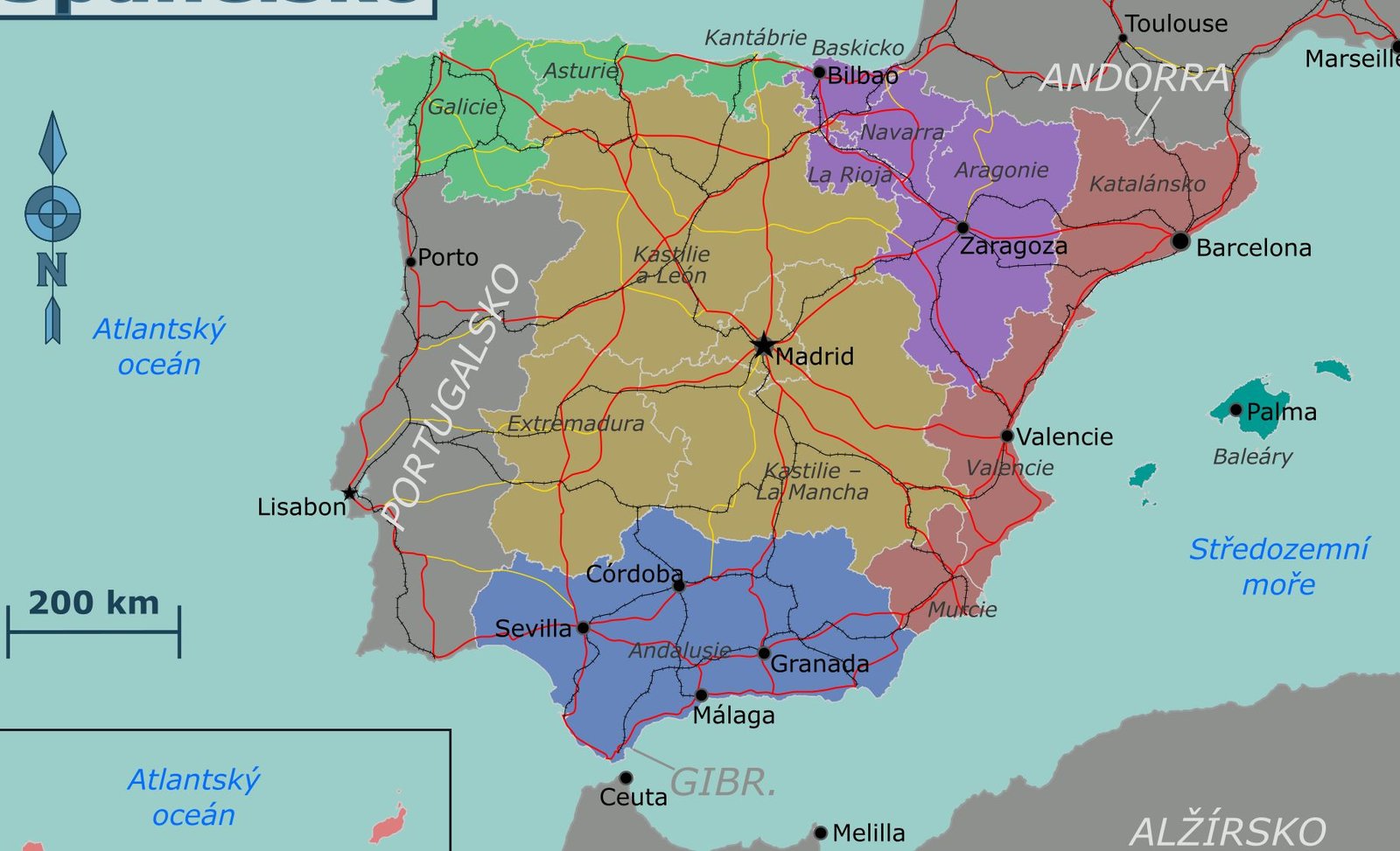
Spain is one of Europe’s most geographically and culturally diverse countries. From the green Atlantic landscapes of Galicia and Asturias to the Mediterranean beaches of Valencia and Catalonia, from the mountains of the Pyrenees to the volcanic landscapes of the Canary Islands, Spain contains an extraordinary variety of environments, cultures, traditions and cuisines.
Administratively, Spain is divided into 17 Autonomous Communities and 2 Autonomous Cities: Ceuta and Melilla. Each autonomous community has its own institutions and significant responsibilities in areas such as education, healthcare, culture, tourism and regional development.
The regions are also remarkably different in character. Andalusia is famous for flamenco, Moorish heritage and Mediterranean landscapes; Catalonia combines Mediterranean culture with Barcelona and the Pyrenees; the Basque Country is known for its distinctive culture and cuisine; Galicia has strong Celtic and Atlantic influences; while Madrid is the country’s political, economic and cultural center.
This regional diversity is one of the main reasons Spain remains one of Europe’s most important destinations for tourism, culture, gastronomy and business.
Spain’s 17 Autonomous Communities
The 17 Autonomous Communities are:
- Andalusia
- Aragon
- Asturias
- Balearic Islands
- Canary Islands
- Cantabria
- Castile and León
- Castile-La Mancha
- Catalonia
- Valencian Community
- Extremadura
- Galicia
- Community of Madrid
- Region of Murcia
- Navarre
- Basque Country
- La Rioja
In addition, Spain has two autonomous cities:
- Ceuta
- Melilla
Spain’s official administration and tourism authorities use this 17-community plus two-city structure.
1. Andalusia
Capital: Seville
Major cities: Seville, Málaga, Córdoba, Granada, Cádiz, Jerez de la Frontera, Almería, Jaén, Huelva
Location: Southern Spain
Andalusia is Spain’s southernmost large autonomous community and one of the country’s most recognizable regions. It stretches from the Atlantic Ocean to the Mediterranean Sea and includes a combination of beaches, mountains, agricultural plains, historic cities and spectacular natural landscapes.
The region has been deeply influenced by Roman, Islamic, Jewish and Christian civilizations. This cultural layering is particularly visible in cities such as Córdoba, Granada and Seville.
Major attractions
- Alhambra and Generalife in Granada
- Mezquita-Catedral of Córdoba
- Seville Cathedral and Giralda
- Royal Alcázar of Seville
- Cádiz and its Atlantic coastline
- Costa del Sol
- Sierra Nevada
- Doñana National Park
- Cabo de Gata
- Ronda
- White Villages of Andalusia
Andalusia is also strongly associated with flamenco, bullfighting traditions, tapas culture and festivals.
Tourism
Tourism is one of the region’s most important industries. Coastal destinations such as Málaga, Marbella, Nerja, Cádiz and Almería attract visitors seeking beaches and sunshine, while Granada, Córdoba and Seville are major cultural destinations.
The region also offers skiing in Sierra Nevada, hiking, rural tourism, golf, cycling and nature tourism.
2. Aragon
Capital: Zaragoza
Major cities: Zaragoza, Huesca, Teruel
Location: Northeastern Spain
Aragon occupies a large area in northeastern Spain and extends from the Ebro Valley toward the Pyrenees.
The region combines historic cities, agricultural landscapes, mountain environments and dramatic geological scenery.
Major attractions
- Zaragoza
- Basilica of Our Lady of the Pillar
- Ordesa and Monte Perdido National Park
- Pyrenees
- Albarracín
- Teruel
- Monasterio de Piedra
- Aínsa
- Huesca
The Pyrenean areas of Huesca are especially important for hiking, climbing, skiing and other outdoor activities.
Aragon also has a rich historical connection with the medieval Crown of Aragon, which played an important role in the history of Spain and the western Mediterranean.
3. Asturias
Official name: Principality of Asturias
Capital: Oviedo
Major cities: Oviedo, Gijón, Avilés
Location: Northern Spain
Asturias is one of Spain’s greenest regions. Situated along the northern Atlantic coast, it is characterized by mountains, forests, rivers, cliffs and beaches.
The region has a strong maritime and industrial heritage but is particularly famous for its natural environment.
Major attractions
- Oviedo
- Gijón
- Covadonga
- Picos de Europa
- Lakes of Covadonga
- Ribadesella
- Llanes
- Cudillero
- Oviedo Cathedral
Asturian cuisine includes cider, cheeses, seafood, fabada asturiana and a variety of traditional mountain dishes.
Asturias is particularly attractive for travelers interested in hiking, rural tourism, coastal landscapes and traditional Spanish culture.
4. Balearic Islands
Capital: Palma
Main islands: Mallorca, Menorca, Ibiza and Formentera
The Balearic Islands are located in the western Mediterranean and are among Spain’s best-known island destinations.
Each major island has a distinctive personality.
Mallorca
Mallorca is the largest island and offers beaches, mountains, historic towns and a sophisticated tourism infrastructure.
Important destinations include:
- Palma
- Serra de Tramuntana
- Sóller
- Alcúdia
- Deià
- Valldemossa
- Cala d’Or
Menorca
Menorca is known for quieter landscapes, beaches, coves and archaeological heritage.
Ibiza
Ibiza is internationally associated with electronic music and nightlife, but it also has traditional villages, beaches and rural landscapes.
Formentera
Formentera is known for its relatively small scale, beaches and clear Mediterranean waters.
The Balearic Islands are important destinations for beach holidays, sailing, diving, cycling, nightlife and luxury tourism.
5. Canary Islands
Capital: Santa Cruz de Tenerife and Las Palmas de Gran Canaria
Main islands: Tenerife, Gran Canaria, Lanzarote, Fuerteventura, La Palma, La Gomera, El Hierro and La Graciosa
The Canary Islands are an Atlantic archipelago located off the northwest coast of Africa. Their volcanic origins have created some of Spain’s most unusual landscapes.
Tenerife
Tenerife is the largest island and home to Mount Teide, Spain’s highest peak.
Major attractions include:
- Teide National Park
- Santa Cruz de Tenerife
- La Laguna
- Puerto de la Cruz
- Anaga Rural Park
- Los Gigantes
Gran Canaria
Gran Canaria offers beaches, mountains, dunes and a large variety of microclimates.
Important places include:
- Las Palmas de Gran Canaria
- Maspalomas
- Roque Nublo
- Puerto de Mogán
- Agaete
Lanzarote
Lanzarote is famous for volcanic landscapes and the artistic influence of César Manrique.
Fuerteventura
Fuerteventura is particularly popular for beaches, windsurfing and kitesurfing.
La Palma
La Palma is known for forests, volcanic scenery and stargazing.
The Canary Islands are an important year-round tourism destination because of their mild climate and geographical isolation.
6. Cantabria
Capital: Santander
Cantabria is a small northern region situated between Asturias and the Basque Country.
Its landscape includes Atlantic beaches, green hills, caves and mountains.
Major attractions
- Santander
- Altamira
- Santillana del Mar
- Comillas
- Picos de Europa
- Cabárceno Nature Park
- El Sardinero Beach
The Cave of Altamira is particularly significant for prehistoric art.
Cantabria is ideal for travelers interested in nature, history, beaches, hiking and rural tourism.
7. Castile and León
Capital: Valladolid
Major cities: Valladolid, Salamanca, León, Burgos, Segovia, Ávila, Soria, Zamora, Palencia
Castile and León is Spain’s largest autonomous community by area and occupies much of the country’s northwestern interior.
The region is exceptionally important for Spanish history and contains numerous historic cities, castles, cathedrals and medieval towns.
Major attractions
- Salamanca
- Segovia
- Ávila
- Burgos
- León
- Valladolid
- Zamora
- Las Médulas
- Sierra de Gredos
Salamanca is famous for its historic university and architecture, while Segovia is known for its Roman aqueduct and medieval castle.
The region is also associated with the Camino de Santiago and numerous historic pilgrimage routes.
8. Castile-La Mancha
Capital: Toledo
Major cities: Toledo, Albacete, Ciudad Real, Cuenca, Guadalajara
Castile-La Mancha occupies a large area south and east of Madrid.
The region is closely associated with Miguel de Cervantes’ famous novel Don Quixote, whose landscapes helped establish the international image of the Spanish interior.
Major attractions
- Toledo
- Cuenca
- Don Quixote Route
- Consuegra windmills
- Tablas de Daimiel
- Ciudad Encantada
- Albacete
- Guadalajara
Toledo is particularly important because of its Christian, Muslim and Jewish heritage.
Castile-La Mancha is also an important agricultural region, especially for wine, olive oil, cheese and cereals.
9. Catalonia
Capital: Barcelona
Major cities: Barcelona, Girona, Tarragona, Lleida
Catalonia is located in northeastern Spain and stretches from the Mediterranean coast to the Pyrenees.
It is one of Spain’s most internationally recognized regions, with Barcelona serving as a major global destination for architecture, business, culture and tourism.
Major attractions
- Barcelona
- Sagrada Família
- Park Güell
- Gothic Quarter
- Costa Brava
- Girona
- Tarragona
- Montserrat
- Pyrenees
- Dalí-related sites in the Empordà area
Catalan culture has distinctive traditions, cuisine, architecture and language.
The region offers an unusually broad tourism mix: Mediterranean beaches, mountain resorts, historic villages, major cultural institutions, food and wine tourism, and urban tourism.
10. Valencian Community
Capital: Valencia
Major cities: Valencia, Alicante, Castellón de la Plana
The Valencian Community lies along Spain’s Mediterranean coast.
It is known for beaches, Mediterranean cuisine, historic cities, festivals and agricultural production.
Major attractions
- Valencia
- City of Arts and Sciences
- Alicante
- Benidorm
- Peñíscola
- Costa Blanca
- Albufera Natural Park
- Castellón
- Elche
Valencia is internationally associated with paella, although the wider region has a much broader culinary tradition.
The region is particularly popular for beach tourism, family holidays, city breaks and outdoor activities.
11. Extremadura
Capital: Mérida
Major cities: Mérida, Cáceres, Badajoz, Plasencia
Extremadura lies in western Spain, bordering Portugal.
It is one of Spain’s most historically significant regions for Roman and medieval heritage.
Major attractions
- Mérida Roman Theatre
- Roman Bridge of Mérida
- Cáceres old town
- Trujillo
- Guadalupe
- Monfragüe National Park
- Plasencia
Mérida was one of the most important Roman cities on the Iberian Peninsula.
Extremadura is also known for rural landscapes, nature reserves, traditional agriculture and gastronomy.
12. Galicia
Capital: Santiago de Compostela
Major cities: A Coruña, Vigo, Santiago de Compostela, Ourense, Lugo, Pontevedra
Galicia occupies the northwestern corner of Spain and faces the Atlantic Ocean.
The region is famous for rugged coastlines, green landscapes, seafood, fishing villages and the Camino de Santiago.
Major attractions
- Santiago de Compostela
- Cathedral of Santiago
- A Coruña
- Vigo
- Lugo Roman Walls
- Rías Baixas
- Ribeira Sacra
- Cíes Islands
- Costa da Morte
Santiago de Compostela is one of Europe’s most important pilgrimage destinations.
Galician cuisine is particularly famous for seafood, octopus, empanadas, cheeses and wines.
13. Community of Madrid
Capital: Madrid
The Community of Madrid is centered on Spain’s capital city and is one of the country’s most important economic, political and cultural regions.
Although relatively small geographically, it has enormous national importance.
Major attractions
- Madrid
- Prado Museum
- Royal Palace
- Retiro Park
- Reina Sofía Museum
- Thyssen-Bornemisza Museum
- Alcalá de Henares
- San Lorenzo de El Escorial
- Sierra de Guadarrama
Madrid is Spain’s principal political and administrative center and a major international business, cultural and transport hub.
Beyond the capital, the region contains historic towns, mountains, monasteries and natural parks.
14. Region of Murcia
Capital: Murcia
Major cities: Murcia, Cartagena, Lorca
Murcia is located in southeastern Spain along the Mediterranean coast.
The region is known for warm weather, agriculture, beaches and historic cities.
Major attractions
- Murcia
- Cartagena
- La Manga del Mar Menor
- Mar Menor
- Lorca
- Cabo de Palos
- Calblanque
- Sierra Espuña
Cartagena has particularly important Roman and archaeological heritage.
The Mar Menor is one of the region’s most distinctive geographical features and supports a range of water-based activities.
15. Navarre
Capital: Pamplona
Navarre is located in northern Spain, bordering France and the Basque Country.
Its landscape changes dramatically from the Pyrenees in the north to Mediterranean-influenced agricultural areas in the south.
Major attractions
- Pamplona
- Bardenas Reales
- Roncesvalles
- Irati Forest
- Olite
- Tudela
- Pyrenees
Pamplona is internationally famous for the San Fermín festival.
Navarre also occupies an important position on the Camino de Santiago.
Its natural diversity makes it attractive for hiking, cycling, cultural tourism and rural travel.
16. Basque Country
Capital: Vitoria-Gasteiz
Major cities: Bilbao, San Sebastián, Vitoria-Gasteiz
The Basque Country is located in northern Spain on the Atlantic coast.
It has a particularly distinctive cultural identity, including the Basque language, traditional sports, architecture, festivals and cuisine.
Major attractions
- Bilbao
- Guggenheim Museum
- San Sebastián
- La Concha Bay
- Vitoria-Gasteiz
- Urdaibai
- Getaria
- Hondarribia
- Basque Coast
Basque cuisine is one of the region’s major attractions. Pintxos, seafood, local produce and innovative gastronomy have made cities such as San Sebastián internationally recognized culinary destinations.
Bilbao has also become an important example of urban regeneration, with the Guggenheim Museum playing a major role in the city’s international cultural profile.
17. La Rioja
Capital: Logroño
La Rioja is a small region in northern Spain and is internationally famous for wine.
Its landscape combines vineyards, agricultural areas, historic towns and mountains.
Major attractions
- Logroño
- Haro
- Briones
- Santo Domingo de la Calzada
- San Millán de la Cogolla
- Rioja wine country
Wine tourism is one of La Rioja’s defining attractions.
Visitors can explore wineries, vineyards, wine museums, traditional villages and historic monasteries.
The region is also crossed by routes connected with the Camino de Santiago.
18. Ceuta
Status: Autonomous City
Location: North Africa
Ceuta is a Spanish autonomous city located on the North African coast, close to the Strait of Gibraltar.
Its geographical position gives it a distinctive cultural and historical character.
Major attractions
- Royal Walls
- Mediterranean coastline
- Mount Hacho
- Plaza de África
- Mediterranean beaches
- Historic military architecture
Ceuta has long been an important strategic location because of its position near the entrance to the Mediterranean.
19. Melilla
Status: Autonomous City
Location: North Africa
Melilla is another Spanish autonomous city on the North African coast.
It has a particularly interesting architectural heritage combining Spanish, Mediterranean and North African influences.
Major attractions
- Melilla la Vieja
- Historic fortifications
- Modernist architecture
- Plaza de España
- Mediterranean coastline
- Local markets and cultural districts
Melilla’s historic center and modernist architecture make it distinct from mainland Spanish destinations.
Regional Diversity of Spain
One of the most interesting aspects of Spain is that there is no single Spanish landscape or cultural experience.
The country can be broadly understood through several geographical and cultural zones.
Northern Atlantic Spain
This includes:
- Galicia
- Asturias
- Cantabria
- Basque Country
Northern Spain is generally greener and more influenced by the Atlantic climate. Mountains meet the sea, and fishing, agriculture and maritime traditions have played important roles in regional history.
Mediterranean Spain
This includes:
- Catalonia
- Valencian Community
- Region of Murcia
- Balearic Islands
Mediterranean Spain is associated with beaches, warm summers, coastal cities, agriculture, seafood and tourism.
Southern Spain
Andalusia dominates southern Spain.
Its culture reflects centuries of interaction between Roman, Islamic, Jewish and Christian civilizations. Flamenco, Moorish architecture, white villages, Mediterranean and Atlantic coastlines and major historic cities are among its defining features.
Central Spain
The central part of the country includes:
- Community of Madrid
- Castile and León
- Castile-La Mancha
- Extremadura
The interior is characterized by large plains, historic cities, agricultural landscapes, castles and extensive rural areas.
Madrid provides a major contrast, functioning as a dense metropolitan center surrounded by the more open landscapes of central Spain.
Northeastern Spain
Northeastern Spain includes:
- Catalonia
- Aragon
- Navarre
The area contains the Pyrenees, Mediterranean coastlines, major urban centers and numerous historic routes.
Barcelona, Zaragoza, Girona and the Pyrenean valleys provide very different experiences within a relatively compact part of the country.
Spain’s Island Regions
Spain has two major autonomous island communities:
Balearic Islands
Located in the Mediterranean, they are known for beaches, coves, sailing, tourism and island culture.
Canary Islands
Located in the Atlantic, they are volcanic islands known for dramatic landscapes, beaches, hiking and a mild climate.
The two archipelagos are therefore geographically and climatically very different despite both being major tourism destinations.
Spain’s Regional Languages
Spain is linguistically diverse.
Spanish, or Castilian, is the official state language. Several other languages have official status alongside Spanish in particular autonomous communities.
These include:
- Catalan
- Valencian
- Basque
- Galician
- Aranese
Language is an important part of regional identity, particularly in Catalonia, the Basque Country, Galicia, Navarre and the Valencian Community.
The presence of multiple languages contributes significantly to Spain’s cultural diversity.
Regional Cuisine of Spain
Spanish cuisine changes considerably from region to region.
Andalusia
Known for:
- Gazpacho
- Salmorejo
- Fried fish
- Jamón
- Tapas
Galicia
Known for:
- Pulpo a la gallega
- Seafood
- Empanada
- Galician cheeses
- Albariño wine
Basque Country
Known for:
- Pintxos
- Bacalao
- Seafood
- Basque-style stews
- Innovative gastronomy
Catalonia
Known for:
- Escalivada
- Crema catalana
- Pa amb tomàquet
- Seafood
- Cured meats
Valencia
Known internationally for:
- Paella
- Fideuà
- Horchata
- Citrus fruits
Asturias
Known for:
- Fabada asturiana
- Cider
- Cabrales cheese
- Seafood
Castile and León
Known for:
- Roast lamb
- Roast suckling pig
- Legumes
- Local cheeses
- Wines
La Rioja
Known primarily for:
- Rioja wines
- Regional vegetables
- Lamb
- Traditional northern Spanish cuisine
This regional variation makes gastronomic tourism an important part of travel throughout Spain.
Spain’s Natural Landscapes
Spain is much more than a beach destination.
Its natural environments include:
- Pyrenean mountains
- Atlantic forests
- Mediterranean coastlines
- Volcanic islands
- Semi-desert landscapes
- Wetlands
- High-altitude mountain ranges
- River valleys
- Vineyards
- Agricultural plains
National parks and protected areas provide opportunities for hiking, wildlife observation, cycling, climbing and other outdoor activities.
Examples include Ordesa y Monte Perdido in Aragon, Sierra Nevada and Doñana in Andalusia, Teide in the Canary Islands, and Monfragüe in Extremadura.
Spain’s official tourism resources highlight natural attractions across virtually all of its autonomous communities.
Spain’s Regions and Tourism
The regional structure is especially important for tourism because different communities offer very different types of holidays.
| Region | Particularly Known For |
|---|---|
| Andalusia | Flamenco, historic cities, beaches, Moorish heritage |
| Aragon | Pyrenees, Zaragoza, mountain tourism |
| Asturias | Green landscapes, mountains, Atlantic coast |
| Balearic Islands | Beaches, islands, sailing, nightlife |
| Canary Islands | Volcanoes, beaches, hiking, year-round tourism |
| Cantabria | Beaches, caves, mountains, Altamira |
| Castile and León | Historic cities, castles, heritage |
| Castile-La Mancha | Don Quixote, Toledo, wine, rural tourism |
| Catalonia | Barcelona, Mediterranean coast, Pyrenees, culture |
| Valencian Community | Valencia, Costa Blanca, beaches, paella |
| Extremadura | Roman heritage, medieval towns, nature |
| Galicia | Santiago, Atlantic coast, seafood, Camino de Santiago |
| Madrid | Capital city, museums, business, culture |
| Murcia | Mediterranean coast, Mar Menor, agriculture |
| Navarre | Pamplona, Pyrenees, Bardenas Reales |
| Basque Country | Bilbao, San Sebastián, cuisine, culture |
| La Rioja | Wine, vineyards, gastronomy |
| Ceuta | North African location, fortifications, Mediterranean |
| Melilla | Modernist architecture, historic fortifications, Mediterranean |
Best Regions of Spain for Different Types of Travelers
Instead of thinking of Spain as a single destination, travelers can select regions according to their interests.
For beaches
- Balearic Islands
- Canary Islands
- Andalusia
- Valencian Community
- Catalonia
- Murcia
For historic cities
- Andalusia
- Castile and León
- Castile-La Mancha
- Extremadura
- Catalonia
- Galicia
For mountains
- Aragon
- Asturias
- Catalonia
- Navarre
- Basque Country
- Castile and León
- Andalusia
For gastronomy
- Basque Country
- Galicia
- Catalonia
- Andalusia
- Asturias
- Valencia
- La Rioja
For wine tourism
- La Rioja
- Catalonia
- Galicia
- Castile and León
- Castile-La Mancha
- Andalusia
- Valencian Community
For island holidays
- Balearic Islands
- Canary Islands
For cultural tourism
- Madrid
- Catalonia
- Andalusia
- Galicia
- Basque Country
- Castile and León
For rural tourism
- Asturias
- Galicia
- Cantabria
- Aragon
- Navarre
- Extremadura
- Castile and León
- La Rioja
How the Regions Make Spain Unique
Spain’s autonomous communities are not simply administrative divisions. They represent a remarkable variety of historical experiences, landscapes, languages, economies and traditions.
A trip to Barcelona is very different from a trip through Galicia. A holiday in Mallorca is different from hiking in the Pyrenees. Seville has a completely different atmosphere from Bilbao, while Madrid provides an urban experience unlike the rural landscapes of Extremadura.
This diversity is one of Spain’s greatest strengths as a tourism destination.
The country’s official tourism organization itself presents the autonomous communities as destinations with distinctive cultural, natural and culinary characteristics.
The Regions of Spain provide a fascinating way to understand the country’s geography, history and culture.
Spain consists of 17 Autonomous Communities and two Autonomous Cities, but within this relatively simple administrative structure lies an enormous diversity of landscapes and identities.
From Andalusia’s Moorish heritage and Mediterranean coastline to Galicia’s Atlantic landscapes, from the Basque Country’s cuisine to Catalonia’s architecture, from Madrid’s museums to the volcanic landscapes of the Canary Islands, every region contributes something different to the Spanish experience.
For travelers, this means Spain can be visited repeatedly without exhausting its possibilities. A visitor interested in beaches can explore the Mediterranean or Atlantic coasts; a history enthusiast can travel through Castilla y León, Andalusia or Extremadura; a nature lover can explore the Pyrenees, northern mountains or volcanic islands; and a food and wine traveler can build entire journeys around regional cuisine and vineyards.
Understanding Spain region by region is therefore one of the best ways to appreciate the country’s extraordinary geographical, cultural and gastronomic diversity.
Leave a Reply
You must be logged in to post a comment.