Castile-La Mancha is one of Spain’s most distinctive inland regions, a land of vast plains, medieval cities, historic castles, traditional villages, world-famous windmills, vineyards, and literary heritage. Located in the heart of the Iberian Peninsula, it is closely associated with Miguel de Cervantes’ Don Quixote, the dramatic landscapes of La Mancha, and centuries of cultural exchange between Christian, Muslim, and Jewish communities.
Although it lies close to Madrid, Castile-La Mancha offers a different side of Spain: quieter historic towns, expansive natural parks, traditional cuisine, and rural landscapes that have inspired Spanish literature and art for generations.
From the medieval streets of Toledo and Cuenca to the windmills of Consuegra, the vineyards of Valdepeñas, and the natural wonders of the Tagus River and Alto Tajo, the region offers a rich variety of experiences for travelers interested in history, culture, gastronomy, and nature.
1. Castile-La Mancha
Regional profile
Official name: Castilla-La Mancha
Country: Spain
Capital and seat of regional government: Toledo
Largest urban center: Albacete
Area: Approximately 79,400 km²
Population: Around 2.1 million inhabitants, depending on the reference year
Autonomous status: Autonomous community of Spain
Provinces: Albacete, Ciudad Real, Cuenca, Guadalajara, and Toledo
Language: Spanish
Currency: Euro (€)
Climate: Predominantly continental Mediterranean, with hot summers and cold winters
Known for: Don Quixote, windmills, castles, Manchego cheese, saffron, wine, and historic towns
Castile-La Mancha occupies much of the southern part of Spain’s central plateau. Its landscapes range from the open plains of La Mancha to mountain ranges, river valleys, forests, wetlands, and limestone gorges.
The region borders Madrid, Castile and León, Aragón, the Valencian Community, Murcia, Andalusia, and Extremadura. Its central position makes it a useful destination for road trips connecting Madrid with southern and eastern Spain.
The modern autonomous community was established during Spain’s transition to democracy and the creation of the country’s system of autonomous communities. It brings together five provinces with distinct local traditions but a shared historical and cultural identity.
2. Geography and natural landscapes
Castile-La Mancha is one of Spain’s largest autonomous communities by area. Much of its territory belongs to the Meseta Central, the broad interior plateau that defines the geography of central Spain.
The plains of La Mancha
La Mancha is the region’s most recognizable landscape. Its broad horizons, dry farming fields, vineyards, olive groves, and scattered villages are strongly associated with the adventures of Don Quixote.
The plains are particularly impressive in spring, when green fields and wildflowers transform the countryside, and in late summer, when golden landscapes reflect the region’s dry climate.
Mountain ranges and highlands
Although the region is famous for flat terrain, its geography is considerably more varied.
- Sierra de Alcaraz: A mountainous area in Albacete province with forests, traditional villages, and scenic hiking routes.
- Serranía de Cuenca: A landscape of pine forests, limestone formations, ravines, and river valleys.
- Montes de Toledo: A range of hills and mountains separating parts of Toledo and Ciudad Real provinces.
- Sierra Morena: Its northern foothills extend into the southern parts of the region, creating rugged countryside and important wildlife habitats.
- Sistema Ibérico: Mountainous terrain in the northeast, including the spectacular Alto Tajo area.
Rivers and wetlands
The Tagus and Guadiana are two of the most important rivers associated with Castile-La Mancha. Their tributaries have shaped the region’s agricultural valleys, wetlands, and natural reserves.
The Lagunas de Ruidera form one of the region’s most remarkable aquatic landscapes, while the Tablas de Daimiel National Park protects a rare wetland ecosystem of international importance.
Agriculture and land use
Agriculture has played a central role in the region’s economy and identity. Vineyards occupy extensive areas, particularly in Ciudad Real, Toledo, and Albacete provinces. Wheat, barley, olives, almonds, and saffron are also important products.
Livestock farming, especially sheep farming, supports the production of Manchego cheese, one of Spain’s best-known regional foods.
3. History of Castile-La Mancha
The history of Castile-La Mancha reflects the many civilizations that have shaped central Spain. Its archaeological sites, Roman ruins, medieval fortifications, religious monuments, and historic towns reveal a past that stretches back thousands of years.
Prehistoric settlements
Human communities inhabited the territory long before the emergence of the Roman Empire. Archaeological discoveries include prehistoric settlements, burial sites, cave paintings, and evidence of early agricultural societies.
The region’s rivers, elevated areas, and fertile valleys provided resources for communities that developed farming, livestock raising, and trade.
Iberian and Celtic peoples
Before Roman conquest, the area was inhabited by several indigenous groups, including Celtiberian and Carpetani communities. Their settlements developed around agriculture, metalworking, trade, and fortified hilltop locations.
These peoples interacted with other Mediterranean cultures and contributed to the cultural foundations of the region.
Roman rule
The Romans incorporated the territory into Hispania and established settlements, roads, agricultural estates, and mining operations. Roman infrastructure helped connect inland communities with other parts of the Iberian Peninsula.
One of the most important archaeological sites is Segóbriga, a Roman city with remains of a theatre, amphitheatre, public buildings, and defensive structures. The ancient mining district of Almadén also demonstrates the region’s historical importance in mineral extraction.
Visigothic Spain
Following the decline of Roman imperial authority in the West, the Visigoths became the dominant political power in much of the Iberian Peninsula.
Toledo emerged as a major political and religious center. Its importance increased considerably, and the city hosted councils that played significant roles in Visigothic government and ecclesiastical life.
Muslim rule and medieval frontier
In the early eighth century, Muslim forces conquered much of the Iberian Peninsula. Toledo became an important urban center under Muslim rule and developed a rich mixture of architectural, intellectual, commercial, and religious traditions.
The territory formed part of a changing frontier between Muslim and Christian political powers. Castles and fortified settlements became strategically important, particularly around Toledo, the Tagus Valley, and the approaches to La Mancha.
The Christian conquest and medieval kingdoms
Toledo was captured by the forces of Alfonso VI of León and Castile in 1085. Its incorporation into the Christian kingdoms marked a major turning point in the history of central Spain.
During subsequent centuries, religious institutions, military orders, noble families, and agricultural communities helped shape the region. The Orders of Santiago, Calatrava, and Saint John of Jerusalem held extensive territories and constructed or controlled important fortifications.
Christian, Muslim, and Jewish communities left lasting marks on urban architecture, crafts, agriculture, language, and intellectual life.
The Spanish Golden Age
During the sixteenth and seventeenth centuries, cities such as Toledo and Almagro developed important artistic and cultural traditions.
Toledo became associated with the painter El Greco, whose distinctive religious paintings contributed to the city’s artistic reputation.
The region also entered world literature through Miguel de Cervantes and his novel Don Quixote. The landscape of La Mancha became inseparable from the adventures of the idealistic knight and his companion, Sancho Panza.
Modern transformation
Over the following centuries, the region remained predominantly agricultural, although mining, manufacturing, trade, and transport gradually diversified its economy.
The twentieth century brought major social and economic changes, including urbanization, agricultural modernization, and improvements in infrastructure.
The creation of the autonomous community of Castilla-La Mancha in the 1980s established a regional political framework for its five provinces. Today, the region combines its historic identity with modern agriculture, services, industry, renewable energy, and tourism.
4. The five provinces of Castile-La Mancha
Castile-La Mancha is made up of five provinces. Each has a different combination of historic cities, natural landscapes, cultural attractions, and local products.
1. Toledo
Historic capital and cultural heritage
Toledo province is home to the regional capital, the medieval city of Toledo, and the celebrated windmills of Consuegra. Other destinations include Talavera de la Reina, Oropesa, and the Montes de Toledo.
Highlights: Toledo Old Town, Alcázar, Toledo Cathedral, Consuegra Castle, Talavera ceramics, and historic villages.
2. Albacete
Urban culture, crafts, and natural landscapes
Albacete is an important commercial and industrial center. Its wider province includes the mountains of the Sierra de Alcaraz, historic towns, wetlands, and traditional villages.
Highlights: Albacete city, Alcalá del Júcar, Almansa Castle, the Lagunas de Pétrola, and the natural scenery around Riópar.
3. Ciudad Real
Wine country, wetlands, and Don Quixote landscapes
Ciudad Real province occupies a large part of La Mancha and is closely associated with vineyards, windmills, historic towns, and protected natural areas.
Highlights: Almagro, Campo de Criptana, Valdepeñas, Tablas de Daimiel National Park, Cabañeros National Park, and the Calatrava castles.
4. Cuenca
Medieval architecture and dramatic natural formations
Cuenca combines a spectacular historic city with pine forests, limestone gorges, reservoirs, and small rural settlements. Its landscapes are particularly appealing to hikers, photographers, and road-trip travelers.
Highlights: Cuenca Old Town, the Hanging Houses, Serranía de Cuenca Natural Park, the Enchanted City, and Belmonte Castle.
5. Guadalajara
Mountain scenery, castles, and historic villages
Guadalajara province extends from the urban area near Madrid to quieter mountain districts, river valleys, and traditional villages. It offers a different landscape from the dry plains associated with La Mancha.
Highlights: Guadalajara city, Sigüenza, Molina de Aragón, the villages of the Black Architecture route, and Alto Tajo Natural Park.
For a broad introduction to the region, Toledo and Cuenca are excellent cultural starting points, while Ciudad Real is particularly appealing for wine tourism and Don Quixote routes. Albacete and Guadalajara offer rewarding combinations of local culture and outdoor exploration. The official regional tourism portal provides further destination ideas for all five provinces.
5. The best cities and towns to visit
Castile-La Mancha’s appeal extends beyond its principal cities. Small towns often preserve some of the region’s most memorable monuments, local traditions, and landscapes.
Toledo
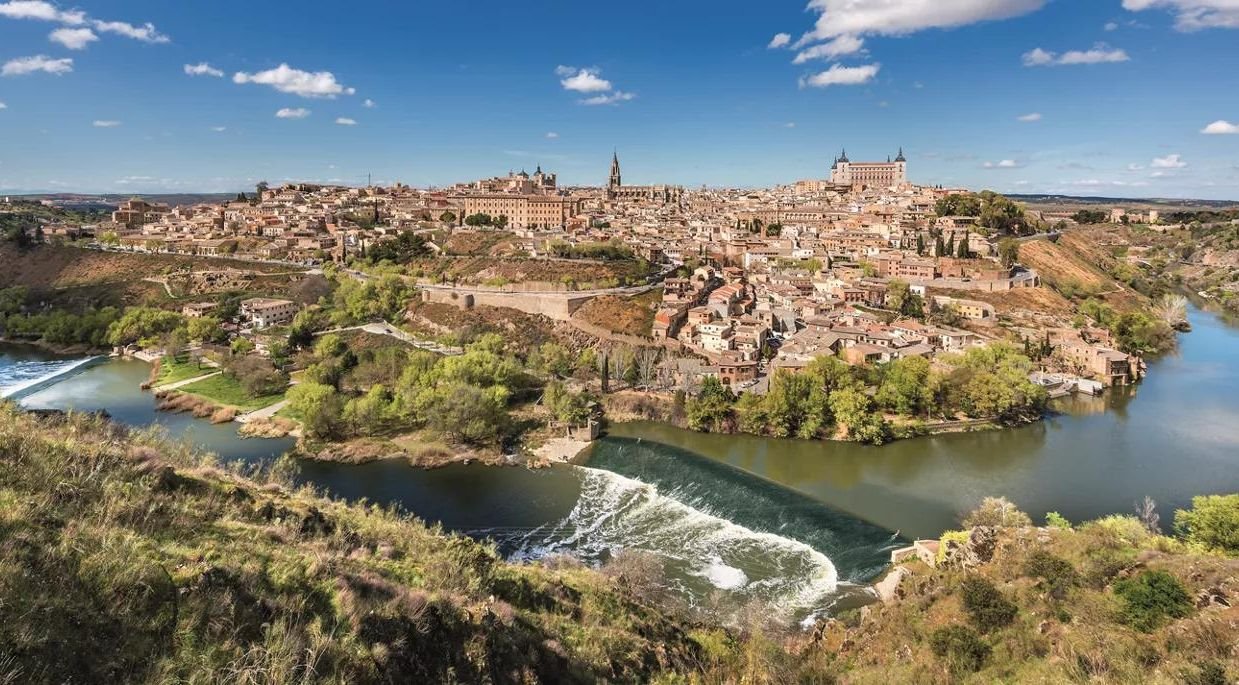
Toledo is one of Spain’s most celebrated historic cities and a UNESCO World Heritage Site. Its position above a bend in the Tagus River gives it a dramatic setting, while its streets preserve centuries of Christian, Muslim, and Jewish heritage.
Explore Toledo Cathedral, the Alcázar, the Monastery of San Juan de los Reyes, the Synagogue of Santa María la Blanca, and the historic Jewish Quarter. The city is also famous for its sword-making traditions, damascened metalwork, marzipan, and views across the river valley.
Cuenca
Cuenca’s old town occupies a rocky ridge between deep river gorges. Its most famous landmarks are the Casas Colgadas, or Hanging Houses, whose wooden balconies project over the Huécar gorge.
Visit the Gothic cathedral, cross the San Pablo Bridge, walk through the medieval streets, and enjoy viewpoints over the surrounding landscape. Cuenca is especially rewarding for travelers who enjoy architecture, photography, and access to nearby natural attractions.
Albacete
Albacete is a lively provincial capital known for its commercial activity, knife-making tradition, museums, and regional fair. It is less dominated by medieval tourism than Toledo or Cuenca, offering a more contemporary picture of everyday life in Castile-La Mancha.
Explore the Cathedral of San Juan Bautista, the Pasaje de Lodares, local markets, and the Museum of Albacete. The city is also a convenient base for excursions to Almansa, Alcalá del Júcar, and the Sierra de Alcaraz.
Ciudad Real
Ciudad Real offers historic churches, squares, museums, and access to the surrounding wine-producing countryside. The Gothic Cathedral of Santa María del Prado and the medieval-era Puerta de Toledo are among its notable landmarks.
The city is a practical base for exploring Almagro, Valdepeñas, the windmills of Campo de Criptana, and the wetlands around Daimiel.
Guadalajara
Guadalajara city is known for the Palacio del Infantado, an impressive palace associated with the Mendoza family. Other attractions include historic religious buildings, public parks, and cultural institutions.
The surrounding province is especially attractive for travelers looking to discover quieter Spain, with medieval villages, castles, forested hills, and the dramatic scenery of the Alto Tajo region.
Almagro
Almagro is one of the region’s finest historic towns. Its Plaza Mayor is recognizable for its green glazed windows and traditional arcaded buildings.
The town’s principal cultural attraction is the Corral de Comedias, a historic open-air theatre that preserves the atmosphere of Spain’s Golden Age. Almagro is also an important destination for classical theatre performances and traditional Manchego cuisine.
Talavera de la Reina
Located in Toledo province, Talavera de la Reina is internationally associated with its decorative ceramics. Its tilework, pottery traditions, churches, and historic center make it an excellent destination for visitors interested in Spanish crafts.
Look for traditional ceramic panels in religious buildings and public spaces, visit workshops when available, and explore the town’s connection with the River Tagus.
Sigüenza
Sigüenza is a historic town in Guadalajara province dominated by its medieval castle and cathedral. Its stone streets, old squares, and traditional buildings create a distinctive atmosphere.
The town is ideal for a cultural weekend, particularly for travelers interested in medieval architecture, regional gastronomy, and rural landscapes.
Alcalá del Júcar
This picturesque village in Albacete province clings to a steep hillside above a bend in the Júcar River. Whitewashed houses, caves built into the rock, a castle, and a historic bridge give it one of the region’s most distinctive settings.
Visitors can walk through the old village, explore rock-cut spaces where open to the public, and enjoy viewpoints over the river gorge.
Other rewarding stops include Consuegra, Campo de Criptana, Belmonte, Oropesa, Molina de Aragón, Atienza, Brihuega, and Alarcón. They are particularly suitable for travelers exploring the region by car.
6. Top attractions and landmarks
Beyond its major cities, Castile-La Mancha has an exceptional collection of castles, archaeological sites, religious monuments, windmills, and unusual geological formations.
Windmills of Consuegra
Toledo province
The twelve historic windmills on Cerro Calderico, overlooking the plains of La Mancha, are among Spain’s most recognizable rural landmarks. Together with the medieval castle, they create the quintessential Don Quixote landscape. Some windmills preserve their traditional machinery.
Windmills of Campo de Criptana
Ciudad Real province
This historic windmill landscape is another important destination associated with Cervantes’ novel. The windmills stand above the town and provide excellent views across the surrounding countryside.
Belmonte Castle
Cuenca province
A remarkably picturesque fifteenth-century fortress, Belmonte Castle features imposing walls, towers, and a striking architectural design. It is a highlight for visitors interested in medieval warfare, noble families, and historic fortifications.
The Enchanted City — Ciudad Encantada
Cuenca province
This natural geological site contains unusual limestone formations shaped by erosion over millions of years. Marked trails lead visitors past rocks that resemble animals, human figures, and other familiar shapes.
Almansa Castle
Albacete province
Rising above Almansa on a rocky outcrop, this medieval castle dominates the surrounding landscape. It is one of the province’s most striking historic monuments and a useful stop on a route between Albacete and the Mediterranean coast.
Palacio del Infantado
Guadalajara city
This distinguished palace combines late Gothic and Renaissance influences. Its decorative façade and historical connection with the powerful Mendoza family make it one of Guadalajara’s principal architectural attractions.
Segóbriga Archaeological Park
Cuenca province
Explore the remains of a Roman settlement, including its theatre, amphitheatre, and other public structures. It offers insight into Roman urban life and the importance of mining and trade in ancient central Spain.
Other significant attractions include the Royal Palace of Aranjuez area near the regional border, the medieval castle of Calatrava la Nueva, the historic center of Oropesa, and the rock formations and archaeological sites scattered throughout Cuenca province.
7. Natural parks and outdoor destinations
Castile-La Mancha is an excellent destination for outdoor tourism. Its protected areas include Mediterranean forests, wetlands, river canyons, mountains, limestone landscapes, and habitats for many bird species. The official regional tourism service highlights both its national parks and its extensive network of nature reserves.
Tablas de Daimiel National Park
One of Spain’s most important wetland environments, this national park protects shallow waters, marsh vegetation, and habitats for resident and migratory birds. Boardwalks and observation points allow visitors to experience the landscape without disturbing sensitive areas.
It is particularly appealing to birdwatchers, photographers, and nature enthusiasts. Water levels and wildlife visibility vary with seasonal conditions.
Cabañeros National Park
Often associated with the wild landscapes of central Spain, Cabañeros contains Mediterranean woodland, scrubland, and open grasslands. Its wildlife includes deer and numerous bird species, including birds of prey.
Guided excursions, nature observation, and hiking on authorized trails are among the principal activities. Certain areas require organized visits, so check current access arrangements before traveling.
Lagunas de Ruidera Natural Park
This chain of interconnected lakes is famous for its clear blue-green waters, limestone barriers, and small waterfalls. It is one of the region’s most attractive destinations for swimming in designated areas when permitted, kayaking, walking, and photography.
Summer is popular, while spring often brings attractive water conditions and a greener surrounding landscape.
Alto Tajo Natural Park
Alto Tajo is characterized by deep limestone canyons, forested slopes, dramatic cliffs, and a river that winds through a relatively remote part of Guadalajara province.
It is ideal for hiking, scenic driving, photography, and exploring rural villages. The area is particularly rewarding for travelers seeking quiet landscapes away from major urban centers.
Serranía de Cuenca Natural Park
The Serranía de Cuenca combines pine forests, rugged mountains, limestone formations, springs, and river valleys. Attractions include the Ventano del Diablo viewpoint and routes around the Enchanted City.
It is a strong choice for hiking, nature photography, and road trips through the mountainous interior.
Hoces del Cabriel
The Cabriel River has carved dramatic gorges through rocky landscapes along the eastern edge of the region. The area offers opportunities for walking, wildlife observation, and selected water-based activities where conditions and regulations allow.
More nature destinations
- Nacimiento del Río Mundo: A spectacular spring and waterfall system near Riópar in Albacete province.
- Las Chorreras del Cabriel: Waterfalls and rock formations in the Enguídanos area of Cuenca province.
- Barrancas de Burujón: Clay cliffs overlooking the Tagus River near Toledo.
- Buendía Reservoir and the Route of the Faces: A walking route through woodland featuring sculpted faces carved into sandstone rock.
- Volcanic landscapes of Campo de Calatrava: A distinctive geological region with volcanic hills, ancient volcanic features, and mineral-rich terrain.
- Hoces del Júcar: Scenic river gorges and viewpoints around Alcalá del Júcar and other parts of Albacete province.
Nature enthusiasts should check seasonal trail closures, fire restrictions, water levels, and access rules before visiting. Summer heat can make exposed routes difficult, while heavy rain and winter weather can affect mountain roads and hiking trails.
8. Don Quixote and the landscapes of La Mancha
Few literary works have become as closely associated with a landscape as Don Quixote has with La Mancha.
Published in two parts in 1605 and 1615, Miguel de Cervantes’ novel follows an idealistic man who imagines himself a knight and sets out to revive chivalric ideals in a changing world. His adventures with Sancho Panza combine humor, social criticism, philosophical reflection, and observations of everyday Spanish life.
The windmills of La Mancha are particularly famous because of the episode in which Don Quixote mistakes them for giants. Although the novel’s precise geography is not always easy to reconstruct, several towns in the region have developed cultural routes inspired by its characters and landscapes.
Important stops on a Don Quixote route
- Consuegra: Windmills and a hilltop castle overlooking the plains.
- Campo de Criptana: A celebrated group of historic windmills above the town.
- El Toboso: Associated with Dulcinea, the idealized lady of Don Quixote’s imagination.
- Argamasilla de Alba: A town traditionally linked to the origins of Cervantes’ story.
- Puerto Lápice: A historic settlement associated with the novel’s journeys and roadside inns.
- Almagro: A major cultural stop with a preserved Golden Age theatre and traditional architecture.
The best way to experience this literary landscape is by car, stopping in villages, visiting local museums, enjoying traditional food, and exploring the countryside at an unhurried pace.
9. Food and gastronomy of Castile-La Mancha
The cuisine of Castile-La Mancha is rooted in rural traditions, seasonal produce, sheep farming, hunting, grain cultivation, and a climate that favors robust, satisfying dishes. Its food culture is particularly appealing to visitors interested in regional Spanish cooking.
Manchego cheese
Queso Manchego is the region’s most internationally recognized product. Made from the milk of Manchega sheep, it has a firm texture and flavors that become more complex as it matures.
It is commonly served in slices with bread, olives, cured meats, or wine. Authentic Manchego cheese benefits from a protected designation of origin, so look for the relevant certification when buying it.
Pisto manchego
Pisto manchego is a traditional vegetable dish made with ingredients such as tomatoes, peppers, courgettes, and onions. It is often served with a fried egg and bread.
Although it resembles other Mediterranean vegetable preparations, its regional identity comes from the ingredients, cooking style, and local tradition.
Gazpachos manchegos
Despite the name, gazpachos manchegos is not the cold tomato soup known elsewhere in Spain. It is a hearty cooked dish generally prepared with pieces of flatbread and meat, often rabbit or poultry, in a rich broth.
It is a particularly characteristic example of the region’s traditional rural cuisine.
Migas
Migas are made from bread crumbs or pieces of stale bread cooked with garlic, olive oil, and other ingredients. Depending on the locality and recipe, they may include chorizo, bacon, peppers, or grapes.
This dish reflects the resourcefulness of traditional rural cooking, in which simple ingredients were transformed into substantial meals.
Atascaburras
Atascaburras is a traditional dish particularly associated with Albacete and neighboring areas. It combines salt cod, potatoes, olive oil, and garlic, often finished with hard-boiled eggs and walnuts.
It is especially associated with colder weather and traditional winter meals.
Duelos y quebrantos
This traditional Manchego dish is prepared with eggs and cured pork products, often including bacon or chorizo. It has a strong association with the literary world of Don Quixote and the food traditions of La Mancha.
Saffron from La Mancha
Saffron is one of the region’s prized agricultural products. Its delicate flavor, aroma, and color make it an important ingredient in rice dishes, stews, and other traditional recipes.
The saffron harvest, especially around parts of Toledo and Ciudad Real provinces, is also part of the region’s agricultural heritage.
Marzipan from Toledo
Toledo is famous for its marzipan, made primarily from almonds and sugar. It is sold throughout the year but is particularly prominent during Christmas celebrations.
Traditional confectionery shops offer shaped marzipan sweets, filled pastries, and other regional specialties.
Other regional foods
- Ajoarriero: A preparation based on salt cod, garlic, olive oil, and other ingredients, with recipes varying by locality.
- Carcamusas: A well-known Toledo dish of stewed meat, commonly served with tomatoes, peas, and sometimes cured pork.
- Morteruelo: A rich pâté-like preparation associated with Cuenca, traditionally made with game or other meats, liver, spices, and bread.
- Alajú: A traditional sweet associated with Cuenca and neighboring areas, typically made with honey, almonds or nuts, and breadcrumbs.
- Olive oil: Particularly important in parts of Toledo, Ciudad Real, and Albacete provinces.
- Vinegar, honey, almonds, and cured meats: Other products that feature prominently in local markets and traditional kitchens.
Wines of Castile-La Mancha
Castile-La Mancha is one of Spain’s major wine-producing regions. Its extensive vineyards produce red, white, and rosé wines, as well as sparkling wines and other styles.
Important wine areas include La Mancha, Valdepeñas, Manchuela, Méntrida, Almansa, and Ribera del Júcar. Tempranillo is widely planted for red wines, while white varieties such as Airén are particularly important in the region’s wine-growing history.
Wine tourism can include cellar visits, tastings, vineyard walks, and local food pairings. Visitors should check booking arrangements in advance, particularly at smaller family-run wineries.
10. Wine tourism and vineyard routes
The vineyards of Castile-La Mancha stretch across vast areas of the central plateau. For travelers interested in wine, the region offers an opportunity to explore Spain’s agricultural traditions outside the better-known wine destinations of the north.
La Mancha wine region
The La Mancha designation covers a large wine-producing area with broad vineyards and a strong agricultural identity. Visitors can explore wineries around towns such as Alcázar de San Juan, Tomelloso, and Socuéllamos.
Valdepeñas
Valdepeñas is one of the region’s best-known wine towns. It combines an established winemaking tradition with museums, cellars, and local restaurants.
Manchuela
Located primarily in the eastern part of the region, Manchuela offers a different combination of vineyards, river landscapes, and rural communities. Its wines are worth discovering as part of a trip through Albacete and Cuenca provinces.
Méntrida and Almansa
Méntrida, near the western part of Toledo province, and Almansa, in Albacete province, provide additional opportunities to explore regional wine styles and rural heritage.
Practical tip: Arrange tastings ahead of time and consider hiring a driver or joining an organized tour if you plan to sample several wines.
11. Culture, festivals, and traditions
The region maintains a lively calendar of religious celebrations, local fairs, theatre performances, agricultural festivals, and traditional crafts. These events provide a deeper understanding of local identity and community life.
Feria de Albacete
Held in September, the Albacete Fair is one of the region’s most important popular celebrations. It combines concerts, entertainment, food, markets, and traditional festivities in and around the historic fairgrounds.
Corpus Christi in Toledo
Toledo’s Corpus Christi celebration is renowned for its religious procession, elaborate decorations, and ceremonial atmosphere. The historic center becomes a focal point for visitors interested in religious heritage and traditional Spanish festivals.
Semana Santa in Cuenca
Holy Week in Cuenca is particularly notable for its solemn processions through the steep streets of the historic city. The surrounding architecture and dramatic topography contribute to the atmosphere of the celebrations.
Classical Theatre Festival of Almagro
Almagro’s International Classical Theatre Festival celebrates Spain’s Golden Age drama and other classical theatrical traditions. Performances take place in historic venues, including the Corral de Comedias.
Consuegra Medieval
Consuegra hosts historical commemorations and medieval-themed events that draw on the town’s castle, its regional history, and the wider heritage of La Mancha. Dates and programs vary from year to year.
Tamborada of Hellín
Hellín, in Albacete province, is famous for its drumming traditions, especially during Holy Week. The powerful sound of thousands of drums is a distinctive part of its cultural identity.
Crafts and traditional industries
Castile-La Mancha has a rich heritage of handmade products:
- Toledo: Damascened metalwork, swords, and traditional confectionery.
- Talavera de la Reina: Decorative ceramics and glazed tiles.
- Cuenca: Traditional handicrafts, regional textiles, and food products.
- Albacete: Knife-making and cutlery.
- La Mancha: Pottery, agricultural crafts, and traditional food production.
For cultural travelers, workshops and craft museums can be as rewarding as visits to major monuments.
12. Outdoor activities and experiences
The region is well suited to travelers who want to combine sightseeing with outdoor recreation.
Hiking and walking
Explore the trails of Serranía de Cuenca, Alto Tajo, the Sierra de Alcaraz, and Cabañeros. Routes range from easy nature walks to more demanding mountain excursions.
Water sports
In designated areas and during permitted seasons, lakes and reservoirs offer opportunities for kayaking, canoeing, and other water activities. Always check local regulations and water conditions.
Cycling and scenic drives
Rural roads connect historic villages, vineyards, windmills, and castles. Mountainous areas provide more challenging cycling, while the plains are suitable for longer rides in cooler weather.
Wildlife watching
Wetlands, forests, and open countryside provide opportunities to observe migratory birds, raptors, deer, and other wildlife. Binoculars and an early start are particularly useful.
Stargazing
Remote areas of Guadalajara and Cuenca provinces offer excellent opportunities for night-sky observation, particularly away from urban light pollution. Choose clear nights and check local access conditions.
Food and wine experiences
Visit wineries, taste Manchego cheese, explore food markets, and discover traditional dishes in family-run restaurants and rural inns.
13. Climate and the best time to visit
Castile-La Mancha generally has a continental Mediterranean climate. Summers are hot and dry, winters can be cold, and temperature differences between day and night may be significant, especially in inland and mountainous areas.
| Season | Typical conditions | Best experiences |
|---|---|---|
| Spring: March–May | Mild to warm, with variable rainfall | City sightseeing, hiking, countryside drives, wildflowers |
| Summer: June–August | Very hot and generally dry | Early-morning sightseeing, lakes, evening events, selected mountain routes |
| Autumn: September–November | Warm at first, then cooler; harvest season | Wine tourism, food festivals, villages, photography |
| Winter: December–February | Cold mornings, possible frost or snow in higher areas | Museums, historic cities, seasonal cuisine, quieter cultural trips |
Spring
Spring is one of the most attractive seasons for exploring the countryside. Temperatures are often comfortable for walking, and vegetation is greener than in midsummer.
It is an excellent time to visit Cuenca’s natural areas, explore Toledo on foot, or follow a Don Quixote route through the plains.
Summer
Summer brings long days and lively festivals, but inland temperatures can become very high. Plan outdoor activities early in the morning or later in the evening, carry water, and avoid strenuous walks during peak heat.
Autumn
September and October are particularly appealing for vineyard visits, local food, and cultural events. The summer heat begins to ease, although early autumn can remain warm.
Winter
Winter is a quieter period for city breaks and cultural tourism. Toledo, Cuenca, Almagro, and Guadalajara remain attractive destinations, but mountain roads may be affected by snow, ice, or fog.
For most travelers, April to June and September to October offer a good balance of comfortable temperatures, outdoor activities, and cultural experiences.
14. Where to stay in Castile-La Mancha
Accommodation options range from historic hotels and contemporary city properties to rural guesthouses, countryside cottages, and vineyard accommodations.
Toledo
Best for first-time visitors, cultural sightseeing, and a short trip from Madrid.
Choose accommodation inside or near the historic center if you want to explore monuments on foot. Hotels outside the old town may offer easier parking and access for road trips.
Cuenca
Best for historic architecture, photography, and nature excursions.
Staying in the old town offers atmosphere and views, while the newer parts of the city can be more convenient for parking, shopping, and transport connections.
Albacete
Best for a practical urban base, business travel, and exploring eastern Castile-La Mancha.
The city has a range of hotels, restaurants, and transport links. It works particularly well as a starting point for trips to Alcalá del Júcar, Almansa, and the Sierra de Alcaraz.
Ciudad Real and Valdepeñas
Best for wine tourism and exploring the plains of La Mancha.
These towns provide access to wineries, agricultural landscapes, and historic destinations. Rural accommodation can be an appealing option for visitors looking for quiet surroundings.
Almagro
Best for theatre, heritage, and traditional architecture.
The town’s historic center is particularly attractive for an overnight stay, allowing visitors to enjoy the squares, restaurants, and evening atmosphere after day-trippers leave.
Sigüenza and Guadalajara province
Best for medieval towns, castles, rural retreats, and outdoor activities.
Historic inns and rural houses are ideal for travelers seeking a slower pace, while accommodation near major roads can be convenient for exploring the province by car.
Rural accommodation
Country houses, small hotels, and rural guesthouses can provide a more intimate experience of the region. They are especially useful for visiting natural parks, small villages, and remote parts of the countryside.
Check whether accommodation offers heating or air conditioning appropriate to the season, parking, restaurant facilities, and access to nearby services.
15. Getting to Castile-La Mancha
Castile-La Mancha is well connected to other parts of Spain, particularly Madrid. The best arrival point depends on which province you intend to visit.
By air
Madrid-Barajas Airport is the main international gateway for many visitors. From Madrid, travelers can continue to Toledo, Guadalajara, Cuenca, Albacete, and Ciudad Real by road or rail, depending on their destination.
Some travelers may also consider other Spanish airports when combining Castile-La Mancha with a longer trip through the country.
By train
Spain’s rail network provides connections between Madrid and several cities in the region. Toledo, Cuenca, Albacete, and Ciudad Real have rail services, although routes, journey times, and service frequencies vary.
High-speed rail is especially useful for certain intercity journeys, but it does not serve every small town or natural attraction. Always check the destination station and onward transport requirements.
By bus
Intercity buses connect major cities and many smaller towns. They can be useful for travelers without a car, but service frequency is generally lower in rural areas.
Plan carefully if you intend to visit windmills, natural parks, castles, or villages away from the main transport corridors.
By car
Driving is often the most flexible way to explore the region, especially if your itinerary includes several provinces.
A rental car makes it easier to visit Consuegra, Campo de Criptana, Almagro, Belmonte, Alcalá del Júcar, and remote natural areas. Major roads connect the principal cities, while smaller regional roads provide access to villages and countryside attractions.
Driving advice: Allow additional time for rural routes, check parking arrangements in historic centers, and avoid assuming that all attractions are open every day. Some castles, wineries, and small museums operate seasonal or reduced schedules.
16. Suggested itineraries
The ideal itinerary depends on how much time you have and whether you prefer cultural sightseeing, nature, or a combination of both.
One day: Toledo
- Morning: Explore Toledo Cathedral, the old town, and the historic streets.
- Afternoon: Visit the Alcázar area, the Jewish Quarter, and selected historic religious buildings.
- Evening: Enjoy a viewpoint overlooking the city and the Tagus River, followed by traditional Manchego food.
Best for travelers based in Madrid who want a concentrated introduction to the region.
Two days: Toledo and Consuegra
- Day 1: Spend the day in Toledo, focusing on its historic center, monuments, and cuisine.
- Day 2: Drive to Consuegra to visit the windmills and castle, then continue through the plains of La Mancha.
Best for combining major cultural heritage with the region’s iconic literary landscape.
Three days: Cuenca and its natural surroundings
- Day 1: Explore Cuenca’s old town, cathedral, Hanging Houses, and San Pablo Bridge.
- Day 2: Visit the Enchanted City and viewpoints in Serranía de Cuenca.
- Day 3: Explore nearby villages and scenic routes, adapting the itinerary to weather and road conditions.
Best for architecture, photography, and outdoor scenery.
- Day 1: Visit Toledo and its historic center.
- Day 2: Explore Consuegra and its windmills.
- Day 3: Continue to Campo de Criptana and El Toboso.
- Day 4: Discover Almagro and its historic theatre.
- Day 5: Visit Valdepeñas or another nearby wine area, with a prearranged winery tour.
Best for travelers interested in literature, history, gastronomy, and rural Spain.
Seven days: A comprehensive regional road trip
- Day 1: Toledo.
- Day 2: Consuegra and the plains of La Mancha.
- Day 3: Ciudad Real and Almagro.
- Day 4: Tablas de Daimiel or Lagunas de Ruidera.
- Day 5: Cuenca and the Hanging Houses.
- Day 6: Serranía de Cuenca or a scenic route through the eastern countryside.
- Day 7: Albacete, Alcalá del Júcar, or a selected destination in Guadalajara province, depending on your preferred route.
Best for visitors who want a broader regional experience. Because the area is large, the itinerary should be adjusted to avoid excessive driving.
17. Shopping and local products
Shopping in Castile-La Mancha is less about large designer districts and more about traditional crafts, food, wine, and locally made products.
The best souvenirs include:
- Manchego cheese: Choose vacuum-packed products if you need to transport them.
- Saffron: A distinctive regional ingredient sold in specialist food shops and markets.
- Toledo marzipan: Traditional almond confectionery, particularly popular around Christmas.
- Talavera ceramics: Decorative plates, tiles, bowls, and traditional pottery.
- Toledo damascene work: Decorative metal objects featuring intricate gold or silver inlays.
- Albacete cutlery: Knives and traditional cutlery associated with the city’s craft heritage; check applicable transport restrictions before purchasing.
- Regional wines and olive oil: Widely available at wineries, specialist shops, and food markets.
- Local honey and preserves: Useful gifts that reflect the region’s agricultural traditions.
For the most authentic experience, buy directly from established workshops, specialist shops, cooperatives, or producers. Ask about provenance and certification when purchasing products that have protected regional designations.
18. Traveling with children
Castile-La Mancha can be a rewarding destination for families because it combines castles, unusual landscapes, historic villages, and outdoor activities.
Family-friendly experiences include:
- Exploring the windmills and castle of Consuegra.
- Discovering the Hanging Houses and bridges of Cuenca.
- Visiting the Enchanted City and its unusual rock formations.
- Walking through the historic streets and squares of Toledo.
- Learning about Roman life at Segóbriga.
- Enjoying designated recreational areas around Lagunas de Ruidera.
- Visiting museums and traditional craft workshops.
- Exploring vineyards and local food traditions through age-appropriate activities.
Families should account for hot summer temperatures, uneven historic streets, and the distances between rural attractions. A car can be particularly helpful when traveling with younger children.
19. Practical travel tips
A successful trip to Castile-La Mancha benefits from a little planning, particularly if you intend to visit rural areas.
Transport: Major cities have public transport links, but many villages, castles, and nature reserves are easier to reach by car.
Walking: Toledo and Cuenca contain steep streets, staircases, and uneven historic paving. Comfortable footwear is essential.
Weather: Carry sun protection and water in summer. In winter, bring warm layers and check conditions before traveling into the mountains.
Opening hours: Museums, castles, wineries, and smaller attractions may close on certain weekdays or operate reduced seasonal hours.
Dining: Lunch is often the main meal of the day, and restaurant schedules may differ from those in northern Europe. Check serving times if you plan to eat outside conventional Spanish hours.
Language: Spanish is the principal language. English is more likely to be understood at major tourist attractions and larger hotels than in small rural communities.
Booking: Reserve accommodation during major festivals and busy holiday periods. Winery visits and guided excursions may also require advance booking.
Respect for nature: Remain on marked trails, follow fire restrictions, and avoid disturbing wildlife in protected areas.
Accessibility: Historic buildings and medieval streets may have limited wheelchair access. Check individual attractions before visiting.
20. Is Castile-La Mancha worth visiting?
Castile-La Mancha is an excellent choice for travelers who want to discover a less crowded, culturally rich side of Spain. It offers a combination of major heritage cities, rural traditions, distinctive cuisine, literary landscapes, and protected natural areas.
Its greatest strengths are its variety and authenticity. You can spend a morning exploring a Gothic cathedral, an afternoon walking among medieval windmills, and the following day discovering a river gorge or tasting regional wine.
The region is particularly suitable for:
- History lovers: Toledo, Cuenca, Roman archaeological sites, and medieval castles.
- Literature enthusiasts: The Don Quixote route and the landscapes of La Mancha.
- Food and wine travelers: Manchego cheese, saffron, regional dishes, and vineyard visits.
- Nature lovers: National parks, wetlands, mountains, forests, and river canyons.
- Road-trip travelers: Historic villages and countryside routes connecting the five provinces.
- Cultural travelers: Classical theatre, religious festivals, ceramics, and traditional crafts.
- Travelers seeking quieter destinations: Rural towns and landscapes beyond Spain’s busiest coastal resorts.
Frequently asked questions about Castile-La Mancha
What is Castile-La Mancha famous for?
Castile-La Mancha is best known for Don Quixote, traditional windmills, Toledo and Cuenca, medieval castles, Manchego cheese, saffron, wine, and its extensive plains. It is also recognized for natural areas such as Tablas de Daimiel, Cabañeros, and Lagunas de Ruidera.
What is the capital of Castile-La Mancha?
Toledo is the capital and the seat of the regional government. It is one of Spain’s most important historic cities and a UNESCO World Heritage Site.
How many provinces does Castile-La Mancha have?
The autonomous community has five provinces: Albacete, Ciudad Real, Cuenca, Guadalajara, and Toledo.
How many days do you need to visit Castile-La Mancha?
Two or three days are sufficient for a short trip focused on Toledo or Cuenca and their immediate surroundings. Four to seven days allow for a wider itinerary including windmills, wine country, historic villages, and natural parks. Exploring all five provinces in depth would require considerably longer.
What is the best time to visit?
April to June and September to October are generally excellent periods for sightseeing and outdoor activities. Spring is attractive for greener landscapes, while autumn is particularly appealing for wine tourism and local festivals.
Can you visit Castile-La Mancha without a car?
Yes. Toledo, Cuenca, Albacete, Ciudad Real, and Guadalajara can be reached using combinations of rail and bus services. However, a car is more convenient for reaching small villages, windmills, castles, wineries, and remote natural areas.
What food should you try?
Start with Manchego cheese, pisto manchego, gazpachos manchegos, migas, atascaburras, duelos y quebrantos, and Toledo marzipan. Regional wines and dishes made with locally produced saffron are also worth discovering.
Is Castile-La Mancha suitable for a family holiday?
Yes. Its castles, historic cities, windmills, geological formations, museums, and designated nature trails provide activities for different ages. Families should plan around summer heat and the distances between some attractions.
What is the difference between Castile-La Mancha and Castile and León?
They are two separate autonomous communities in central and northern Spain. Castile-La Mancha lies mainly south of Madrid and includes Toledo, Cuenca, Albacete, Ciudad Real, and Guadalajara. Castile and León lies farther north and includes cities such as Valladolid, Salamanca, Burgos, and León. Both share historical Castilian traditions, but their geography, regional institutions, and cultural attractions differ.
Is Castile-La Mancha expensive?
Compared with Spain’s most prominent international city destinations, many towns in Castile-La Mancha offer relatively affordable accommodation and dining. Costs vary by season, location, and festival dates. Historic city centers and major events may be more expensive than smaller rural destinations.
Castile-La Mancha captures a distinctive part of Spain’s identity: the medieval streets of Toledo, the extraordinary setting of Cuenca, the windmills immortalized by Don Quixote, the traditions of Manchego cuisine, and the quiet beauty of inland landscapes.
Its five provinces offer more than a collection of historic monuments. They reveal the connections between literature, agriculture, architecture, regional crafts, and the natural environment.
For travelers willing to venture beyond Spain’s most famous coastal destinations, Castile-La Mancha provides a rewarding combination of cultural discovery, rural exploration, outdoor recreation, and memorable food. Whether visited on a short excursion from Madrid or explored over a week-long road trip, it is a region that deserves a place on a comprehensive Spanish travel itinerary.