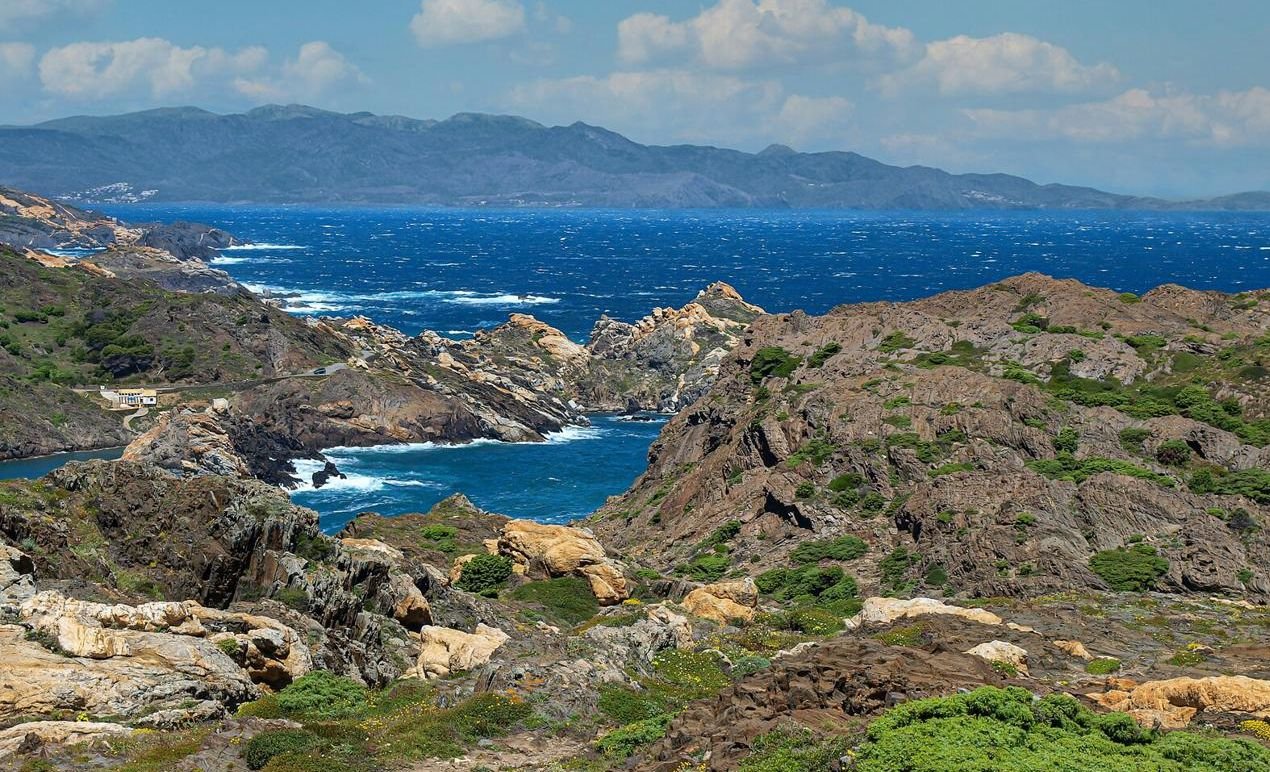
Catalonia is one of Spain’s most distinctive regions, known for its Mediterranean coastline, historic cities, mountain landscapes, internationally recognized architecture, celebrated cuisine, and strong cultural identity. Located in the northeastern corner of the Iberian Peninsula, it combines cosmopolitan urban life with medieval villages, coastal resorts, wine-growing areas, and the dramatic peaks of the Pyrenees.
Its capital, Barcelona, is among Europe’s best-known destinations, famous for the architectural works of Antoni Gaudí, the Sagrada Família, the Gothic Quarter, and its lively food and arts scenes. Yet Catalonia extends far beyond Barcelona. The region includes the beaches and fishing villages of the Costa Brava, the Roman heritage of Tarragona, the medieval streets of Girona, the vineyards of Penedès, and the mountain communities of the Catalan Pyrenees.
Catalonia is also a region with its own language, traditions, institutions, and historical experience. Catalan is widely used alongside Spanish, while local festivals, human towers, traditional dances, and distinctive culinary customs remain important parts of everyday cultural life.
Whether visitors are interested in architecture, history, hiking, beaches, gastronomy, wine tourism, winter sports, or rural escapes, Catalonia offers a remarkable range of experiences within a relatively compact area.
2. Catalonia at a glance
Country
Spain
Capital
Barcelona
Area
Approximately 32,100 km²
Population
Over 8 million
Official languages
Catalan, Spanish, and Aranese in the Aran Valley
Currency
Euro (€)
Time zone
Central European Time / Summer Time
Coastline
Mediterranean Sea
Autonomous community
One of Spain’s 17
Main airport
Barcelona–El Prat Airport
Catalonia borders France and Andorra to the north, the Spanish autonomous community of Aragon to the west, the Valencian Community to the south, and the Mediterranean Sea to the east. Its location has historically made it a meeting point between the Iberian Peninsula and the rest of Europe.
The region is divided into four provinces: Barcelona, Girona, Lleida, and Tarragona. Each has its own landscape, traditions, historic towns, and tourism opportunities.
3. Geography and natural landscapes
Catalonia has an unusually varied geography for a region of its size. Its landscapes stretch from high mountain ranges in the north to fertile inland plains, river valleys, wetlands, and Mediterranean beaches in the east and south.
The Pyrenees
The Pyrenees form a natural barrier between Spain and France. The Catalan section contains high peaks, glacial valleys, mountain lakes, forests, and traditional villages.
Popular outdoor destinations include the Aigüestortes i Estany de Sant Maurici National Park, the Vall de Núria, the Cerdanya valley, and the Val d’Aran. Activities include hiking, mountain biking, climbing, skiing, snowboarding, and wildlife observation.
The Mediterranean coast
Catalonia’s eastern and southern coastlines feature sandy beaches, rocky coves, fishing harbors, seaside promenades, and marine landscapes.
The Costa Brava, north of Barcelona, is particularly famous for rugged cliffs and small coves. The central coastline includes the Maresme and Garraf areas, while the southern Costa Daurada is known for long sandy beaches and family-oriented resorts.
Inland plains and agricultural regions
The western interior includes the Lleida plain and the agricultural lands surrounding the Segre River. Orchards, cereals, olive groves, vineyards, and market gardens contribute to the region’s agricultural economy.
The Penedès wine region, the plains around Lleida, and the countryside near Tarragona provide a different experience from the busy coastal cities.
River systems and wetlands
Important rivers include the Ebro, Segre, Ter, Llobregat, and Fluvià. The Ebro Delta in southern Catalonia is one of the region’s most important wetland environments, supporting rice cultivation, lagoons, coastal dunes, and large numbers of birds.
Montserrat
Montserrat is one of Catalonia’s most recognizable natural landmarks. Its unusual serrated rock formations rise dramatically above the surrounding countryside. The mountain is also home to the Benedictine monastery of Santa Maria de Montserrat, a major religious and cultural destination.
4. History of Catalonia
Catalonia’s historical identity developed through centuries of Mediterranean trade, Roman settlement, medieval political institutions, industrialization, and modern debates about regional autonomy.
Ancient Iberian and Roman periods
Before Roman rule, the area was inhabited by Iberian peoples and other communities connected to Mediterranean trading networks. The Romans established settlements and infrastructure, including the important city of Tarraco, present-day Tarragona.
Tarraco became a major administrative center in Roman Hispania. Its surviving amphitheater, walls, circus remains, and other archaeological sites illustrate the region’s importance during antiquity.
The medieval period
Following the collapse of Roman authority and successive periods of Visigothic and Muslim rule, Christian counties emerged in parts of northeastern Iberia. The County of Barcelona gradually became particularly influential.
During the Middle Ages, Catalonia developed political institutions and legal traditions of its own. Through dynastic union with the Kingdom of Aragon, the Catalan territories became part of the Crown of Aragon, a Mediterranean power with commercial and political connections extending to the Balearic Islands, Italy, and beyond.
Barcelona grew into an important maritime and trading center, while towns such as Girona, Vic, Besalú, and Tarragona developed their own religious, commercial, and civic significance.
Early modern transformations
The dynastic union between the Catholic Monarchs in the late 15th century brought the crowns of Castile and Aragon under the same monarchs, although their institutions remained distinct for a long period.
The 17th and early 18th centuries brought conflict and political change. The War of the Spanish Succession ended in Catalonia with the fall of Barcelona in 1714. The subsequent Bourbon reforms substantially altered the region’s traditional political institutions.
Industrialization in the 19th century
Catalonia became one of Spain’s leading centers of industrial development, particularly in textiles, manufacturing, commerce, and later other industrial sectors. Barcelona expanded rapidly, and its growing urban population helped transform the region’s economy and society.
Industrialization also supported cultural movements that renewed interest in the Catalan language, literature, architecture, and historical heritage.
Modernisme and cultural revival
During the late 19th and early 20th centuries, Catalonia became associated with Modernisme, a distinctive artistic and architectural movement. Antoni Gaudí, Lluís Domènech i Montaner, and Josep Puig i Cadafalch were among its most influential figures.
Their buildings helped shape Barcelona’s international reputation and remain central to the region’s cultural tourism.
The Spanish Civil War and Franco era
The Spanish Civil War of 1936–1939 brought severe disruption. After the victory of Francisco Franco’s forces, Catalan political autonomy was abolished and the public use of Catalan was restricted, especially during the earlier decades of the dictatorship.
Despite repression, Catalan language and cultural traditions survived through families, cultural networks, publishing, and other forms of community life.
Democracy and modern autonomy
Following Franco’s death in 1975 and Spain’s transition to democracy, Catalonia regained democratic self-government under the 1978 Spanish Constitution and the Statute of Autonomy of 1979. A revised Statute was approved in 2006, although parts of it were subsequently challenged and altered through constitutional review.
In the 21st century, debates over independence, constitutional arrangements, fiscal relations, and regional identity have become important features of Catalan politics. The 2017 independence referendum and the events surrounding it produced a major political and constitutional crisis.
Today, Catalonia remains an autonomous community within Spain, with its own parliament, government, and substantial responsibilities in areas such as education, healthcare, culture, and regional administration.
5. The four provinces of Catalonia
Catalonia’s four provinces offer different experiences, from Barcelona’s metropolitan attractions to the Costa Brava, the Pyrenees, and the historic cities of southern Catalonia.
1. Barcelona Province
Barcelona Province is the region’s principal economic and cultural center. It includes the city of Barcelona, coastal towns, industrial cities, wine-producing areas, and mountain destinations.
Main destinations: Barcelona, Sitges, Montserrat, Vic, Manresa, Mataró, and Terrassa.
Best for: Architecture, museums, shopping, nightlife, gastronomy, beaches, business travel, and day trips.
2. Girona Province
Girona Province is famous for the Costa Brava, medieval towns, mountain scenery, and a rich culinary tradition. The provincial capital has a beautifully preserved historic center, while the coastline features fishing villages and rocky coves.
Main destinations: Girona, Figueres, Cadaqués, Tossa de Mar, Begur, Besalú, and the Cerdanya area.
Best for: Coastal road trips, medieval architecture, art, hiking, diving, and food tourism.
3. Lleida Province
Lleida Province is the most inland of the four provinces and is known for agricultural plains, the western Catalan Pyrenees, Romanesque churches, and winter sports.
Main destinations: Lleida, Vielha, La Seu d’Urgell, Sort, the Vall de Boí, and the Aigüestortes region.
Best for: Skiing, hiking, mountain villages, rafting, rural tourism, and cultural heritage.
4. Tarragona Province
Tarragona Province combines Roman archaeological sites, sandy Mediterranean beaches, vineyards, historic monasteries, and the Ebro Delta wetlands.
Main destinations: Tarragona, Reus, Tortosa, Cambrils, Salou, Montblanc, and the Priorat wine region.
Best for: Roman history, family holidays, beaches, wine tourism, cycling, and nature excursions.
The provincial divisions are useful for planning journeys, but Catalonia also has a more detailed administrative geography based on counties, known as comarques, and the Aran Valley. These counties often have strong local identities and distinct landscapes.
6. Barcelona: Catalonia’s capital and leading destination
Barcelona is the best-known city in Catalonia and one of Spain’s major international tourism destinations. It combines historic neighborhoods, Modernist architecture, Mediterranean beaches, cultural institutions, shopping streets, and a thriving restaurant scene.
Major attractions in Barcelona
- Sagrada Família: Antoni Gaudí’s extraordinary basilica, recognized for its elaborate facades, symbolic design, and forest-like interior.
- Park Güell: A landscaped architectural park featuring colorful mosaics, curved structures, and panoramic city views.
- Casa Batlló: One of Gaudí’s most imaginative residential buildings, famous for its flowing shapes and colorful facade.
- Casa Milà (La Pedrera): A landmark Modernist building with an undulating stone exterior and distinctive rooftop chimneys.
- Gothic Quarter: A historic district of narrow streets, medieval buildings, plazas, and remnants of the city’s Roman past.
- La Rambla: A famous central promenade connecting Plaça de Catalunya with the waterfront area.
- Mercat de la Boqueria: A well-known food market offering fresh produce, seafood, snacks, and Catalan ingredients.
- Montjuïc: A hill overlooking the harbor, with gardens, museums, cultural venues, and historic fortifications.
- Barceloneta Beach: An urban beach popular for swimming, walking, seafood restaurants, and seaside recreation.
- Palau de la Música Catalana: A spectacular concert hall designed by Lluís Domènech i Montaner and recognized as a UNESCO World Heritage site.
Barcelona’s cultural districts
The Eixample district is particularly associated with Modernist architecture and broad, regularly laid-out streets. El Born combines historic lanes, independent shops, museums, and restaurants. Gràcia has a more neighborhood-oriented atmosphere, with small squares and local festivals, while Poble-sec is known for dining and access to Montjuïc.
How long to spend in Barcelona
Three to four full days is a good starting point for first-time visitors who want to explore the main landmarks without rushing. Travelers interested in museums, architecture, beaches, and day trips could comfortably spend five to seven days.
Barcelona is also a convenient base for excursions to Montserrat, Girona, Tarragona, Sitges, and nearby wine-producing areas.
7. The most beautiful places to visit in Catalonia
Catalonia offers a wide range of destinations beyond its capital. These places are particularly worthwhile for travelers seeking a mix of nature, heritage, local culture, and coastal scenery.
Girona
Girona is a historic city famous for its medieval streets, colorful riverside houses, Jewish heritage, cathedral, and fortified walls. It makes an excellent day trip from Barcelona, although an overnight stay allows more time to explore its restaurants and quieter lanes.
Tossa de Mar
Tossa de Mar combines a sandy beach with a medieval walled settlement overlooking the sea. It is one of the Costa Brava’s most recognizable towns and suits travelers interested in swimming, coastal walks, photography, and historic architecture.
Cadaqués and Cap de Creus
Cadaqués is a whitewashed seaside village associated with artist Salvador Dalí. Nearby Cap de Creus Natural Park features unusual rock formations, exposed headlands, hiking routes, and spectacular views of the Mediterranean.
Besalú
Besalú is known for its medieval stone bridge, preserved old town, and historic Jewish heritage. It is an appealing stop on a road trip through the inland villages of Girona Province.
Sitges
South of Barcelona, Sitges offers beaches, a historic waterfront, museums, restaurants, and a lively cultural calendar. It is popular for short seaside breaks and can be reached by train from Barcelona.
Tarragona
Ancient Tarraco was one of the principal Roman cities of the Iberian Peninsula. Today, its amphitheater, circus, walls, and archaeological sites stand alongside a lively modern city and Mediterranean waterfront.
Vall de Boí
This Pyrenean valley is celebrated for its Romanesque churches, mountain villages, hiking trails, and proximity to Aigüestortes i Estany de Sant Maurici National Park. Its church ensemble is a UNESCO World Heritage site.
Ebro Delta
The Ebro Delta is an expansive wetland landscape of rice fields, lagoons, beaches, and bird habitats. It is particularly attractive to birdwatchers, cyclists, photographers, and travelers looking for quieter natural surroundings.
8. The Costa Brava: Catalonia’s dramatic northern coastline
The Costa Brava stretches along the northeastern Mediterranean coast, from the Blanes area toward the French border. Its name, commonly translated as the “Wild Coast,” reflects its rugged cliffs, rocky headlands, pine-covered hills, and small coves.
It is one of Catalonia’s most appealing destinations for travelers who want a combination of beaches, coastal hiking, fishing villages, and historic settlements.
Best Costa Brava destinations
- Lloret de Mar: A major holiday resort with beaches, nightlife, gardens, and a wide range of accommodation.
- Tossa de Mar: A picturesque town with medieval walls, a historic center, and sandy beaches.
- Calella de Palafrugell: A traditional coastal settlement known for white houses, small beaches, and a relaxed atmosphere.
- Begur: A historic hilltop town surrounded by coves, including Aiguablava, Sa Tuna, and Sa Riera.
- Palamós: A working port known for seafood, fishing traditions, and beaches.
- L’Escala: A coastal town with access to archaeological sites at Empúries and a long-standing anchovy tradition.
- Cadaqués: An artistic village near the Cap de Creus peninsula, known for whitewashed houses and its connection with Salvador Dalí.
- Roses: A seaside destination with a large bay, beaches, historic remains, and access to Cap de Creus.
Activities on the Costa Brava
Visitors can swim, snorkel, scuba dive, kayak, sail, paddleboard, and explore coastal walking paths. The Camí de Ronda network follows sections of the coastline and offers access to scenic coves and viewpoints.
The region is also suitable for cycling, sailing holidays, local food tours, and visits to nearby medieval villages.
Best time to visit
Late spring and early autumn are excellent for comfortable temperatures, coastal walks, and sightseeing. July and August are the busiest months, particularly in popular resort towns. Some smaller seasonal businesses operate on reduced schedules outside the summer period.
9. The Costa Daurada and southern Catalonia
The Costa Daurada, or Golden Coast, extends along the southern Catalan shoreline. It is characterized by long sandy beaches, family-friendly resorts, seaside promenades, and a generally more open coastline than the rocky Costa Brava.
Salou
Salou is one of the region’s major holiday destinations. Its attractions include beaches, promenades, water-based activities, restaurants, and access to PortAventura World.
Cambrils
Cambrils combines sandy beaches with a traditional fishing harbor and a reputation for seafood. It is particularly suitable for families and travelers who prefer a coastal town with a strong culinary identity.
Reus
Reus is associated with Modernist architecture and is the birthplace of Antoni Gaudí. Visitors can explore historic squares, architectural landmarks, shopping streets, and local food traditions.
Tarragona
Tarragona is one of the most important historical destinations in southern Catalonia. Its Roman archaeological ensemble includes monuments spread across the city and nearby settlements. The historic center, cathedral, Mediterranean Balcony viewpoint, and beaches make it an appealing destination for both culture and leisure.
Ebro Delta
Further south, the Ebro Delta offers a contrasting landscape of lagoons, rice paddies, dunes, and protected natural areas. It is best explored slowly, with time for birdwatching, cycling, and local seafood.
10. The Catalan Pyrenees and mountain tourism
The Catalan Pyrenees provide a completely different atmosphere from the Mediterranean coast. Mountain villages, stone churches, alpine meadows, rivers, forests, and high-altitude lakes make this region ideal for outdoor recreation throughout the year.
Aigüestortes i Estany de Sant Maurici National Park
This is Catalonia’s principal national park, known for mountain lakes, granite peaks, forests, and well-marked walking routes. The landscape is especially attractive during the warmer months, when hiking and wildlife observation are popular.
Visitors should check access arrangements, trail conditions, and weather forecasts before entering remote areas.
Vall de Núria
Vall de Núria is a mountain destination reached by a rack railway from Ribes de Freser. It offers hiking, mountain scenery, family activities, and winter sports when conditions permit.
Val d’Aran
Located in the northwestern Pyrenees, Val d’Aran has a distinctive cultural identity and its own traditional language, Aranese, a variety of Occitan. The main town, Vielha, is a convenient base for exploring mountain villages, valleys, and ski areas.
Baqueira-Beret
Baqueira-Beret is one of Spain’s best-known ski destinations. It offers winter sports facilities, mountain accommodation, restaurants, and access to the landscapes of Val d’Aran.
La Cerdanya
La Cerdanya is a broad Pyrenean valley popular for walking, cycling, skiing, and rural holidays. Its open scenery and mountain villages make it attractive to visitors looking for outdoor activities in every season.
Mountain activities
- Hiking and long-distance trekking.
- Mountain biking and road cycling.
- Skiing and snowboarding.
- White-water rafting in suitable rivers and seasons.
- Horse riding and nature observation.
- Visits to Romanesque churches and historic mountain settlements.
- Rural accommodation and traditional mountain cuisine.
The Pyrenees are especially rewarding for travelers who combine outdoor activities with local culture rather than treating the mountains only as a sports destination.
11. Catalan language, identity, and culture
Catalonia has a distinctive cultural identity shaped by its language, literature, artistic movements, festivals, and historical institutions. Although it is part of Spain, its cultural traditions have developed their own character over many centuries.
Languages spoken in Catalonia
Catalan is the region’s principal traditional language and is widely used in public life, education, media, literature, and cultural activities. Spanish is also widely spoken. Aranese, a variety of Occitan, is an official language in Catalonia and has particular importance in Val d’Aran.
English is commonly understood in major tourist areas, hotels, and international businesses, especially in Barcelona, although knowledge varies in smaller towns and rural communities.
A few useful Catalan expressions include:
| Catalan | English |
|---|---|
| Hola | Hello |
| Bon dia | Good morning |
| Bona tarda | Good afternoon |
| Si us plau | Please |
| Gràcies | Thank you |
| Adéu | Goodbye |
| Quant costa? | How much does it cost? |
| On és…? | Where is…? |
Learning a few Catalan expressions is a good way to engage with local culture, even when conversations continue in Spanish or English.
The Catalan flag
The traditional Catalan flag, known as the Senyera, consists of four red horizontal stripes on a yellow background. It is a longstanding regional symbol and appears during public celebrations, sporting events, and cultural festivals.
The Estelada, a flag associated with Catalan independence movements, is a different political symbol and should not be confused with the traditional Senyera.
Castells: human towers
One of Catalonia’s most remarkable traditions is castells, in which teams called colles castelleres build human towers several levels high. Participants of different ages work together to create the structure, requiring balance, coordination, trust, and teamwork.
Castells are especially associated with festivals in towns such as Valls, Vilafranca del Penedès, and Tarragona. The tradition is recognized by UNESCO as intangible cultural heritage.
Sardana dance
The sardana is a traditional Catalan group dance performed in a circle, often to music played by a cobla ensemble. It is associated with community gatherings and regional identity.
Sant Jordi’s Day
Celebrated on 23 April, Sant Jordi’s Day is one of Catalonia’s most beloved cultural occasions. Streets fill with book stalls and flower sellers, and people traditionally exchange books and roses. Barcelona becomes particularly lively during the celebration.
Catalan literature and art
Catalonia has produced influential writers, painters, architects, and musicians. Joan Miró, Salvador Dalí, and Antoni Tàpies are among the region’s important modern artists. Catalan literature ranges from medieval works to contemporary novels, poetry, and journalism.
12. Catalan architecture and UNESCO World Heritage
Architecture is one of Catalonia’s strongest cultural attractions. Roman remains, Romanesque churches, Gothic cathedrals, Modernist buildings, and contemporary design can all be found across the region.
Modernisme
Catalan Modernisme flourished around the turn of the 20th century. It combined artistic craftsmanship, natural forms, decorative materials, and innovative structural design.
Its best-known architect is Antoni Gaudí, whose buildings have become international symbols of Barcelona. Other influential architects include Lluís Domènech i Montaner and Josep Puig i Cadafalch.
Important sites include the Sagrada Família, Park Güell, Casa Batlló, Casa Milà, Palau de la Música Catalana, and the Hospital de Sant Pau complex.
Romanesque architecture
The Romanesque churches of the Vall de Boí in the Pyrenees are among the most important examples of this architectural tradition in Catalonia. Their stone construction, bell towers, and historic mural paintings reflect the region’s medieval religious culture.
Roman heritage
Tarragona preserves substantial remains from its Roman past, including sections of city walls, an amphitheater, a circus, and archaeological structures throughout the surrounding area.
Poblet Monastery
The Royal Monastery of Santa Maria de Poblet, in Tarragona Province, is a major Cistercian complex surrounded by countryside and vineyards. Its church, cloisters, royal tombs, and monastic buildings illustrate the importance of religious institutions in medieval Catalan history.
UNESCO sites to consider
Notable World Heritage properties in Catalonia include:
- Works of Antoni Gaudí.
- Palau de la Música Catalana and Hospital de Sant Pau.
- The archaeological ensemble of Tarraco.
- The Romanesque churches of the Vall de Boí.
- Poblet Monastery.
- The rock art sites of the Mediterranean Basin on the Iberian Peninsula.
- The archaeological heritage of Empúries as part of the wider historical landscape, although its designation should not be confused with the separate UNESCO property listings above.
UNESCO listings can include multiple buildings or locations under a single property, so travelers interested in visiting them should check the precise boundaries and access arrangements of each site.
13. Traditional Catalan food and gastronomy
Catalan cuisine reflects the region’s geography and history. Coastal communities have developed seafood traditions, inland areas specialize in agricultural products and meat dishes, and mountain regions favor hearty stews, mushrooms, cheeses, and preserved foods.
The cuisine is often associated with the idea of mar i muntanya, or sea and mountain, which combines ingredients from the coast and interior in the same dish.
Famous Catalan dishes
Pa amb tomàquet
Bread rubbed with ripe tomato, olive oil, and salt. It is a simple but iconic part of Catalan dining, served with cured meats, cheese, or other dishes.
Escalivada
Roasted eggplant, red peppers, and sometimes onions, dressed with olive oil. It can be served as a starter, side dish, or topping for bread.
Calçots with romesco sauce
Grilled long spring onions traditionally eaten during the winter and early spring calçotada season. They are dipped in a rich sauce made with ingredients such as roasted peppers, tomatoes, nuts, and olive oil.
Suquet de peix
A traditional fish and seafood stew, especially associated with coastal communities. Recipes vary, but commonly include potatoes, fish stock, garlic, and local seafood.
Escudella i carn d’olla
A substantial traditional stew with meat, vegetables, legumes, and pasta or rice-based elements, particularly associated with colder weather and festive meals.
Crema catalana
A creamy custard dessert topped with a thin layer of caramelized sugar. It is one of the region’s best-known sweet specialties.
Seafood and coastal cuisine
Coastal destinations such as Palamós, Cambrils, Roses, and L’Escala are excellent places to explore seafood. Depending on the season and restaurant, menus may feature prawns, anchovies, squid, mussels, grilled fish, and rice dishes.
Mountain cuisine
The Pyrenees and inland areas offer a different culinary tradition. Dishes may include mountain stews, grilled meats, mushrooms, local cheeses, cured sausages, and trinxat, a preparation made with cabbage and potatoes that is particularly associated with the Cerdanya area.
Wine regions
Catalonia is an important wine-producing region. Its best-known wine areas include:
- Penedès: Famous for still wines and an important center of cava production.
- Priorat: Known for concentrated, high-quality wines grown in challenging terrain.
- Empordà: A wine region near the Costa Brava with a mix of red, white, and rosé wines.
- Terra Alta: Particularly associated with white wines made from Garnatxa Blanca.
- Conca de Barberà: Known for vineyards and distinctive local varieties.
Cava, Spain’s traditional sparkling wine, has strong historical links with the Penedès area, particularly around Sant Sadurní d’Anoia.
14. Economy and business in Catalonia
Catalonia is one of Spain’s major economic regions. Its economy combines services, manufacturing, tourism, research, logistics, agriculture, and internationally connected businesses.
Official statistical data recorded 8,124,126 residents on 1 January 2025, approximately 16.5% of Spain’s population. Barcelona Province accounted for the largest share, while Girona, Lleida, and Tarragona had more varied combinations of urban, rural, industrial, and tourism-related economies.
Major economic sectors
Services and commerce: Barcelona is a major center for professional services, retail, finance, design, consulting, and international business.
Tourism and hospitality: City tourism, coastal holidays, cultural visits, mountain tourism, food experiences, and business events support a broad tourism economy.
Manufacturing: Catalonia has a long industrial tradition, including automotive manufacturing and components, chemicals, pharmaceuticals, food processing, machinery, and industrial technology.
Technology and research: Barcelona hosts technology companies, research institutions, startup communities, and international conferences. Biotechnology, digital services, and advanced engineering are important areas of activity.
Logistics and transport: The Port of Barcelona, Barcelona–El Prat Airport, road networks, and rail connections support trade and international mobility.
Agriculture and food production: The region produces fruit, vegetables, olive oil, wine, cereals, meat, and other agricultural goods. Lleida is particularly important for fruit growing, while several coastal and inland areas have established wine industries.
Barcelona as a business destination
Barcelona attracts conferences, trade fairs, professional events, and international companies. Its location near France, Mediterranean transport links, universities, and skilled workforce contribute to its business profile.
Other cities also play important roles. Tarragona has industrial and chemical activity, Girona combines tourism and food industries, and Lleida serves as a regional center for agriculture, logistics, and services.
Living and working in Catalonia
Catalonia offers a broad labor market, especially in metropolitan Barcelona. Tourism, technology, healthcare, education, logistics, hospitality, and industrial sectors create different employment opportunities.
However, living costs and job availability vary considerably by location. Housing in central Barcelona and popular coastal areas can be expensive, while smaller towns and inland communities may offer lower housing costs but fewer specialized jobs.
People planning to work in Catalonia should check the applicable Spanish employment, residence, tax, and professional qualification rules for their circumstances.
15. Festivals and annual events
Catalonia’s calendar includes religious celebrations, local fairs, music festivals, cultural performances, and traditional community events.
Sant Jordi’s Day — 23 April
Streets fill with roses, books, and cultural activities. It is one of the most distinctive days in the Catalan cultural calendar.
La Mercè — September
Barcelona’s major city festival includes concerts, street performances, parades, fireworks, and traditional cultural activities. Exact program dates vary by year.
Castells festivals
Human tower performances take place at many local festivals. Tarragona and the towns of the Penedès area have particularly strong casteller traditions.
Calçotada season — winter and early spring
These communal meals celebrate grilled calçots served with romesco-style sauce. Valls is particularly associated with the tradition.
Festa Major de Gràcia — August
Barcelona’s Gràcia neighborhood is famous for its creatively decorated streets, music, community activities, and festive atmosphere.
Temps de Flors — usually May
Girona’s flower festival transforms courtyards, monuments, and streets with floral displays and artistic installations.
Travelers planning their visits around a festival should check the official program for the relevant year, since dates, performance schedules, and ticket arrangements may change.
16. Weather and the best time to visit Catalonia
Catalonia’s climate varies with elevation and distance from the Mediterranean. Coastal areas generally experience mild winters and warm summers, while the interior has greater temperature extremes and the Pyrenees experience colder winters and snow.
| Season | Typical conditions | Best activities |
|---|---|---|
| Spring: March–May | Mild and increasingly warm; occasional rain | City sightseeing, hiking, villages, gardens, wine tours |
| Summer: June–August | Hotter weather, especially inland; warm sea | Beaches, swimming, sailing, festivals, mountain escapes |
| Autumn: September–November | Often pleasant early in the season, becoming cooler | Cultural trips, wine tourism, walking, food experiences |
| Winter: December–February | Mild on the coast, colder inland, snow in the mountains | Skiing, Christmas markets, museums, mountain villages |
Spring
Spring is an excellent season for exploring Barcelona, Girona, Montserrat, and the medieval villages of the interior. Hiking becomes more attractive as temperatures rise, although mountain weather can remain unpredictable.
Summer
Summer is the main beach season. The Costa Brava and Costa Daurada become busy, and popular coastal accommodation should be booked well ahead. Inland cities can become very hot, so sightseeing is often more comfortable in the morning and evening.
Autumn
September and October can offer a good balance of warm coastal weather and more comfortable sightseeing conditions. Autumn is also appealing for wine tourism and rural travel.
Winter
Winter brings fewer beach visitors and a different atmosphere to historic cities. Ski resorts in the Pyrenees attract winter sports enthusiasts, while Barcelona and Tarragona remain suitable for cultural breaks.
Overall recommendation: May, June, September, and early October are particularly versatile months for combining city sightseeing, countryside exploration, and coastal excursions. The best dates depend on whether beaches, mountain sports, festivals, or lower visitor numbers are the priority.
17. How to get to Catalonia
Catalonia is well connected to other parts of Spain and Europe by air, rail, road, and sea.
By air
The main international gateway is Barcelona–El Prat Airport, which serves Barcelona and much of Catalonia. Girona–Costa Brava Airport can be convenient for some northern coastal destinations, while Reus Airport offers access to parts of the Costa Daurada when suitable flights operate.
Airport transfers should be planned according to the arrival airport and final destination, as these airports are not interchangeable in terms of journey time.
By train
Barcelona has extensive domestic rail connections and high-speed services to cities including Madrid and Zaragoza. International rail connections link Barcelona with southern France and onward European destinations, although direct routes and schedules depend on the travel date.
Regional and commuter trains connect Barcelona with numerous towns along the coast and in the surrounding region.
By bus
Long-distance and regional buses connect major cities, coastal towns, and some mountain destinations. Buses may be particularly useful for places with limited railway access, although frequency can be reduced in rural areas.
By car
Driving offers considerable flexibility for exploring the Costa Brava, the Pyrenees, inland wine regions, and smaller villages.
Barcelona and other major urban centers can have congested traffic and limited parking. Visitors should check toll arrangements, low-emission-zone rules, parking restrictions, and local road conditions before setting out.
By ferry and cruise ship
The Port of Barcelona is a major Mediterranean cruise port and also handles ferry services. Depending on the route and season, ferry connections may serve the Balearic Islands and other Mediterranean destinations.
18. Getting around Catalonia
The best transport method depends on the places being visited.
- Barcelona: The metro, urban trains, buses, trams, and walking are practical for most visitors.
- Barcelona to Girona: Train services provide a convenient option for a day trip or onward travel.
- Barcelona to Tarragona: Rail connections make the city accessible without a rental car.
- Costa Brava: A car can be useful for reaching smaller coves and villages, although buses serve some major resort towns.
- Costa Daurada: Trains and buses serve several coastal towns, while a car provides flexibility for inland excursions.
- Pyrenees: A car is often convenient for visiting remote villages and trailheads, but some destinations have seasonal public transport or specific access arrangements.
- Ebro Delta: A car or bicycle is useful for exploring the spread-out wetlands, villages, viewpoints, and birdwatching areas.
Travelers should verify train and bus timetables before travel, particularly for weekends, public holidays, winter mountain routes, and remote destinations.
19. Accommodation in Catalonia
Catalonia offers accommodation for a wide range of budgets and travel styles, from international hotels and boutique properties to campsites, rural guesthouses, mountain lodges, and self-catering apartments.
Barcelona
The capital offers luxury hotels, design-led boutique accommodation, hostels, serviced apartments, and budget properties. Staying near a convenient metro station can be more useful than choosing accommodation solely because it is close to a single attraction.
Costa Brava
Options range from coastal resorts and family hotels to small guesthouses, holiday apartments, campsites, and rural properties. The busiest beachfront areas are generally more expensive during peak summer periods.
Costa Daurada
Salou and Cambrils have extensive holiday accommodation, including family resorts, apartments, and hotels. The area is particularly convenient for beach holidays and visits to nearby theme parks.
Girona and the medieval interior
Girona and the surrounding countryside offer boutique hotels, historic guesthouses, rural houses, and small properties in traditional villages. These can be attractive for food-focused and cultural trips.
The Pyrenees
Mountain destinations have ski hotels, rural lodgings, guesthouses, hostels, and self-catering apartments. Accommodation availability can be strongly seasonal, especially around winter sports periods and summer hiking holidays.
Practical accommodation advice
Book popular beach resorts early for July and August, and reserve ski accommodation ahead of major winter holiday periods. When staying in rural areas, check parking, restaurant opening days, heating, and the distance to public transport.
Visitors should also confirm the total accommodation price, including any applicable local tourist tax or additional fees.
20. Shopping in Catalonia
Catalonia offers international shopping brands, independent boutiques, food markets, traditional crafts, and local products.
Barcelona shopping
Barcelona is the principal shopping destination, with major retail streets, department stores, independent design shops, and specialist food markets. The Passeig de Gràcia area is particularly known for luxury fashion and architecture, while other neighborhoods offer vintage clothing, local designers, and artisan products.
Traditional products to buy
- Cava and wines from Catalan wine regions.
- Olive oil and regional food products.
- Turrón and other traditional sweets.
- Local ceramics and handcrafted goods.
- Catalan textiles and design products.
- Artisan cheeses, cured meats, and preserved seafood.
Food products should be packaged appropriately for the journey, and travelers should check import restrictions when taking agricultural goods or alcohol across international borders.
21. Family holidays in Catalonia
Catalonia is well suited to families because it offers beaches, urban attractions, nature parks, interactive museums, and amusement parks.
Family-friendly options include:
- Barcelona’s science and maritime attractions, parks, and aquarium.
- The beaches and promenades of Cambrils and other Costa Daurada towns.
- PortAventura World near Salou, with theme park attractions and associated entertainment facilities.
- Easy walking routes around Montserrat and selected Pyrenean valleys.
- Coastal boat trips and supervised water activities.
- Historic town centers such as Girona and Besalú.
- Nature observation and cycling in suitable areas of the Ebro Delta.
Families should check age and height requirements for rides, swimming conditions, transport accessibility, and the suitability of mountain trails before booking activities.
22. Outdoor activities and adventure tourism
Beyond its major cities and beaches, Catalonia is a strong destination for active holidays.
Hiking
The region has coastal walking paths, forest trails, high-mountain routes, and long-distance hiking itineraries. Montserrat, the Costa Brava, the Garrotxa volcanic area, and the Pyrenees offer contrasting landscapes.
Cycling
Catalonia is popular with road cyclists and mountain bikers. Girona and its surrounding countryside are particularly well known among international cycling enthusiasts. Coastal routes, rural roads, and mountain passes provide a range of challenges.
Water sports
The Mediterranean coast supports sailing, kayaking, paddleboarding, snorkeling, diving, and wind-related sports in suitable locations. Conditions vary by season, wind, and local regulations.
Winter sports
The Pyrenees offer skiing, snowboarding, snowshoeing, and other winter activities. Conditions and opening dates depend on snowfall, temperature, and resort operations.
Wildlife and nature
The Ebro Delta is especially important for birdwatching, while the Pyrenees and protected inland landscapes offer opportunities to observe mountain and forest wildlife. Visitors should remain on permitted paths and respect protected habitats.
23. Suggested itineraries for Catalonia
The following itineraries are designed around different travel styles. Journey times vary with traffic, transport schedules, and seasonal conditions.
Itinerary A: Three days in Barcelona
City break
Day 1 — Historic Barcelona
Explore the Gothic Quarter, Barcelona Cathedral, La Rambla, the Boqueria market area, and the waterfront.
Day 2 — Gaudí and Modernisme
Visit the Sagrada Família, Passeig de Gràcia, Casa Batlló, and Casa Milà. Reserve timed entry for popular attractions in advance.
Day 3 — Park Güell and Montjuïc
Explore Park Güell, enjoy neighborhood cafés, and spend the afternoon visiting Montjuïc’s viewpoints, gardens, or museums.
Itinerary B: Seven days in Catalonia
First-time visitors
Day 1–3: Barcelona’s architecture, museums, markets, and neighborhoods.
Day 4: Take a day trip to Montserrat or spend time in Sitges.
Day 5: Explore Girona’s historic center and medieval walls.
Day 6: Visit a Costa Brava destination such as Tossa de Mar, Begur, or Calella de Palafrugell.
Day 7: Visit Tarragona for Roman heritage, or choose a coastal day in the Costa Daurada.
Itinerary C: Ten days of coast, culture, and nature
Road trip
Days 1–3: Barcelona, including its major architectural landmarks and historic neighborhoods.
Days 4–5: Girona and the Costa Brava, with time for villages, beaches, and coastal walking.
Day 6: Visit Besalú or explore another inland village.
Days 7–8: Travel toward Tarragona and the Costa Daurada for Roman monuments and beaches.
Days 9–10: Explore the Ebro Delta, or extend the trip inland toward the wine regions if you prefer gastronomy and countryside to wetlands.
Itinerary D: Five days in the Catalan Pyrenees
Outdoor adventure
Day 1: Arrive in a mountain base such as Vielha or the Vall de Boí.
Day 2: Explore a Romanesque village and its surrounding valley.
Day 3: Hike in an appropriate section of the Aigüestortes area, subject to access and weather conditions.
Day 4: Enjoy a second outdoor activity, such as cycling, rafting when available, or a shorter mountain walk.
Day 5: Explore local food and villages before departing.
24. Practical travel tips for Catalonia
A little preparation can make a trip through Catalonia much easier, especially if the itinerary includes both cities and rural destinations.
Money: Catalonia uses the euro. Cards are widely accepted in urban areas, although small businesses and rural establishments may have different payment preferences.
Language: Catalan and Spanish are both widely used. English is more common in international tourist settings than in some smaller communities.
Reservations: Book major attractions, popular restaurants, and peak-season accommodation in advance when necessary. Check official ticket terms before purchasing.
Transport: Use public transport in Barcelona when practical. Consider renting a car for remote villages, mountain areas, and flexible coastal exploration.
Driving: Follow posted speed limits, parking rules, and environmental-zone restrictions. Check whether your vehicle is permitted in the low-emission zones relevant to your journey.
Beaches: Pay attention to flags, currents, lifeguard instructions, and local safety notices. Conditions can change quickly, particularly in windy weather.
Mountain safety: Check forecasts and trail conditions, carry suitable footwear and water, and avoid routes that exceed your experience or equipment.
Dining hours: Lunch and dinner schedules may differ from those in other countries. Some restaurants close between services or operate reduced hours outside the main tourist season.
Tourist taxes: Certain accommodation stays may be subject to regional or municipal tourist taxes. Confirm the amount and whether it is included in the advertised price.
Crowds: Barcelona’s major attractions and popular coastal destinations can be busy in summer. Early visits, weekday excursions, and overnight stays in smaller towns can provide a more relaxed experience.
25. Is Catalonia worth visiting?
Catalonia is an excellent destination for travelers who want variety without crossing large distances. Few regions combine internationally recognized architecture, Roman archaeological sites, medieval towns, Mediterranean beaches, mountain scenery, wine-producing areas, and a distinctive living culture so closely together.
Barcelona provides the region’s most recognizable landmarks and urban energy. Girona and the Costa Brava offer history and coastal beauty, Tarragona connects visitors with the Roman past, and the Pyrenees provide outdoor adventures and a quieter rural atmosphere.
Catalonia also rewards travelers who move beyond the best-known attractions. Local markets, traditional festivals, village restaurants, small museums, and rural landscapes often reveal as much about the region as its famous monuments.
For a first visit, a week is a useful starting point. Travelers with ten days or more can combine Barcelona with Girona, the Costa Brava, Tarragona, or a mountain destination without attempting to cover the entire region at once.
Catalonia is one of Spain’s most diverse and culturally distinctive destinations. Its appeal lies in the relationship between its landscapes and communities: the Mediterranean coast and the Pyrenees, modern cities and medieval villages, Roman heritage and contemporary design, and traditional Catalan customs alongside an internationally connected economy.
Whether planning a short city break, a family beach holiday, a cultural tour, a culinary journey, or an extended road trip, visitors can build an itinerary around their interests and travel pace.
The best way to experience Catalonia is to combine its major landmarks with time in its smaller towns and natural landscapes. That balance provides a richer understanding of the region’s history, culture, cuisine, and enduring character.
Leave a Reply
You must be logged in to post a comment.