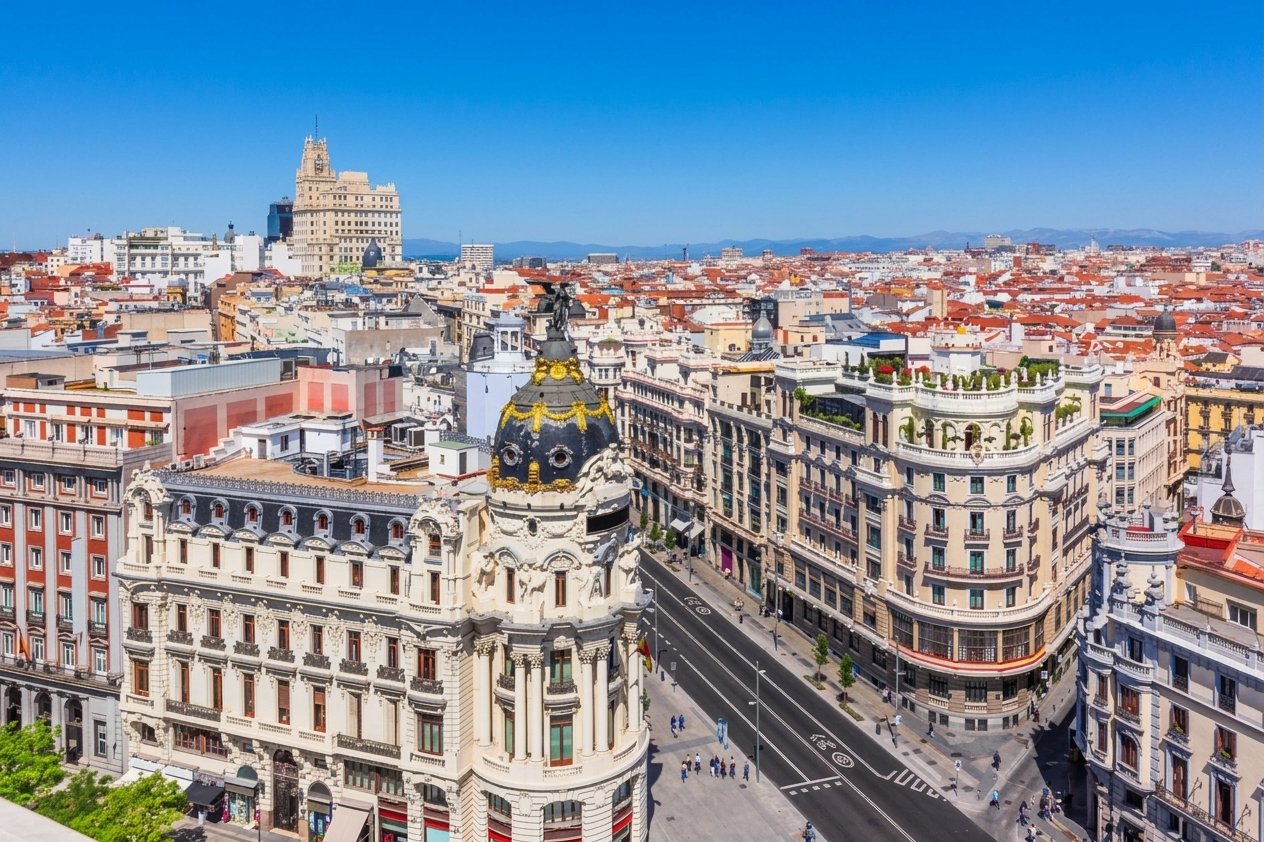
The Madrid Region, officially known as the Community of Madrid (Comunidad de Madrid), is one of Spain’s most diverse destinations. Beyond the internationally famous capital, the region offers royal palaces, historic university towns, medieval villages, mountain landscapes, protected forests, traditional gastronomy, vineyards and some of the country’s most important cultural heritage.
Madrid city is the natural starting point for most visitors, with its world-renowned art museums, lively neighbourhoods, grand avenues, restaurants and nightlife. Yet travelling beyond the capital reveals a quieter side of central Spain: the royal gardens of Aranjuez, the literary heritage of Alcalá de Henares, the monumental monastery of San Lorenzo de El Escorial, the mountain scenery of the Sierra de Guadarrama and the traditional streets of towns such as Chinchón and Buitrago del Lozoya. These destinations are central to the region’s official tourism offer.
1. Understanding the Madrid Region
The Community of Madrid is an autonomous community in central Spain and consists of a single province. Madrid city serves as both the national capital and the regional capital. Its central position has helped make it a major transport hub, connecting different parts of Spain by high-speed railway, conventional trains, highways and air travel.
The region combines a large metropolitan area with smaller settlements and rural landscapes. Its northern and north-western areas rise towards the Sierra de Guadarrama, where visitors find forests, mountain peaks, hiking routes and traditional villages. The south and south-east contain agricultural landscapes, vineyards and historic towns, while river valleys and reservoirs provide additional opportunities for nature-based tourism.
Why visit the Madrid Region?
- Art and culture: major museums, galleries, theatres and historic buildings.
- Royal heritage: palaces, monasteries, formal gardens and historic royal sites.
- UNESCO heritage: internationally recognised cultural landscapes, university heritage, royal sites and protected woodland.
- Historic towns: medieval walls, traditional squares, churches and local architecture.
- Nature and adventure: hiking, cycling, climbing, wildlife observation and mountain recreation.
- Food and wine: traditional Madrid dishes, regional produce, tapas and wines from the Vinos de Madrid designation.
- Family tourism: parks, museums, stadium tours and leisure attractions.
- Convenient travel: an extensive transport network makes many destinations accessible as day trips.
The region is particularly attractive to travellers who want to combine a major European city with history, nature and rural experiences without travelling long distances between destinations.
2. Madrid City: The Gateway to the Region
Although this guide covers the whole region, Madrid city deserves several days of exploration. Its appeal comes from the combination of historic monuments, world-class art, contemporary culture, neighbourhood life and a dining scene that continues well into the evening.
The Art Triangle
Madrid’s Art Triangle brings together three major museums:
- Prado Museum: renowned for Spanish painting, including works by Velázquez and Goya, alongside important European collections.
- Reina Sofía Museum: a major collection of modern and contemporary art, particularly famous for Picasso’s Guernica.
- Thyssen-Bornemisza National Museum: a wide-ranging collection that complements the other two museums with works from different artistic periods.
These institutions are among Madrid’s most important cultural attractions. Visitors with limited time should select one or two museums rather than trying to see all three in a single day. Spain.info+1
The Royal Palace and Royal Collections
The Royal Palace of Madrid is one of the city’s most imposing landmarks. Its formal rooms, decorative arts and monumental setting reflect the history of the Spanish monarchy. The nearby Royal Collections Gallery adds context through artworks and historical objects associated with royal patronage.
The Almudena Cathedral stands beside the palace, while nearby gardens and viewpoints provide opportunities to pause and enjoy the city’s architecture.
Opening arrangements may vary due to ceremonies or official events, so check current visitor information before travelling.
Plaza Mayor and Puerta del Sol
Plaza Mayor is a historic square surrounded by arcaded buildings, cafés and restaurants. It is a natural starting point for exploring the old centre and the narrow streets of Madrid de los Austrias, the district associated with the city’s Habsburg-era development.
Puerta del Sol is one of Madrid’s busiest central meeting places. It is associated with New Year celebrations, the statue of the Bear and the Strawberry Tree, and the Kilometre Zero marker traditionally linked with Spain’s radial road network.
The nearby Barrio de las Letras, or Literary Quarter, celebrates the city’s literary heritage and offers restaurants, small squares, bookshops and cultural venues.
Gran Vía and the Modern City
Gran Vía is one of Madrid’s best-known avenues. Its architecture, shops, cinemas, theatres and musical productions make it a lively destination throughout the day and into the evening.
For a different perspective, explore the neighbourhoods branching off the main streets. Malasaña is known for independent shops and cafés; Chueca for restaurants and nightlife; La Latina for traditional taverns and tapas; Lavapiés for multicultural food and arts; and Chamberí for local markets and residential streets.
Retiro Park and the Landscape of Light
Retiro Park is one of Madrid’s most enjoyable green spaces. Its tree-lined paths, gardens, lake and Crystal Palace area offer a welcome break from busy streets and museum visits.
Together with the Paseo del Prado and surrounding cultural institutions, Retiro forms part of the Landscape of Light, a UNESCO World Heritage cultural landscape. This area reflects the historical relationship between public space, urban planning, science, art and recreation.
Other green spaces include Casa de Campo, the Royal Botanical Garden and the historic garden of El Capricho. Check individual access arrangements, as some gardens may have limited opening days or hours.
Flamenco, Theatre and Nightlife
Madrid offers established flamenco venues, live music, traditional bars, contemporary performance spaces and major theatres. Theatres along Gran Vía stage musicals and other productions, while smaller venues offer concerts and alternative cultural events.
The city’s nightlife ranges from quiet wine bars to busy clubs. Dinner is often served later than visitors from some countries may expect. Booking ahead is sensible for popular restaurants and performances, especially on weekends.
Football and Sports Tourism
Football is an important part of Madrid’s identity. Visitors may be interested in stadium tours and club history at Santiago Bernabéu Stadium or Atlético de Madrid’s home ground. Tours, match tickets and access arrangements vary, so use official channels and check dates before planning a visit.
3. UNESCO World Heritage and the Region’s Historic Treasures
The Community of Madrid contains five UNESCO World Heritage properties: the Landscape of Light in Madrid, Alcalá de Henares, Aranjuez, San Lorenzo de El Escorial and the Hayedo de Montejo beech forest. They represent different aspects of the region’s history, from literature and royal power to urban planning and natural heritage.
Alcalá de Henares — Literature and Learning
East of Madrid, Alcalá de Henares is closely associated with Miguel de Cervantes, author of Don Quixote. Its historic centre features arcaded streets, courtyards, churches and university buildings.
The University of Alcalá developed from a major Renaissance educational project. The historic Colegio Mayor de San Ildefonso is one of its most important architectural landmarks, while the Cervantes Birthplace Museum explores the writer’s life and legacy.
Best for: literary history, architecture, university heritage, cafés and a relaxed day trip.
San Lorenzo de El Escorial — Royal and Religious Heritage
Located near the Sierra de Guadarrama, San Lorenzo de El Escorial is famous for its monumental Royal Monastery, commissioned under Philip II in the sixteenth century. The complex combines a royal residence, monastery, basilica, library and royal burial traditions.
The town also offers mountain views, historic streets and access to the surrounding foothills. Allow several hours for the monumental complex and check which sections are open.
Best for: Spanish history, architecture, royal heritage and mountain scenery.
Aranjuez — Palaces, Gardens and River Landscapes
Aranjuez is known for its Royal Palace and extensive landscaped gardens near the Tagus River. The palace reflects royal tastes and ceremonial life, while the gardens provide tree-lined walks, fountains and historic landscaping.
The surrounding agricultural area is associated with seasonal produce, including strawberries and asparagus. Spring is especially attractive for garden visits.
Best for: gardens, royal history, photography, food and a leisurely excursion.
Hayedo de Montejo — Protected Woodland
Near Montejo de la Sierra, the Hayedo de Montejo is a notable beech forest in the Sierra del Rincón. It offers a very different experience from the region’s monuments and urban attractions.
Access is managed to protect the woodland, and reservations or guided entry may be required. Autumn foliage is particularly popular, so consult official visitor information well in advance.
Best for: nature, autumn colours, forest walks and environmental education.
4. The Historic Towns of the Madrid Region
Beyond the major heritage sites, the region has many smaller towns where traditional architecture, local food and rural surroundings create rewarding excursions.
Chinchón
Chinchón is famous for Plaza Mayor, a distinctive square surrounded by traditional buildings with wooden balconies. The square hosts different activities throughout the year and remains the centre of local life.
Visitors can explore the surrounding lanes, enjoy regional cuisine and sample the town’s traditional anise-flavoured spirit. It is a good choice for a relaxed excursion focused on architecture and food.
Buitrago del Lozoya
In the north of the region, Buitrago del Lozoya is known for its medieval walls and setting beside the Lozoya River. Its compact historic centre, fortifications and surrounding landscape make it a rewarding destination for history enthusiasts and photographers.
Combine a walk around the old town with viewpoints and local cultural attractions where available.
Patones de Arriba
Patones de Arriba is a picturesque hillside settlement known for its traditional dark-stone architecture, narrow lanes and rural atmosphere. It is popular for photography, walking and dining.
The streets can be steep and narrow, and access or parking may be restricted at busy times. Wear comfortable shoes and respect residential spaces.
Manzanares el Real
This town is known for the Castillo de los Mendoza, a prominent late-medieval castle, and for its location near La Pedriza and the Sierra de Guadarrama.
It is an excellent combination of history and outdoor adventure. Visitors can explore the castle before taking a walk in the surrounding landscape, provided weather, trail conditions and access rules permit.
Rascafría and El Paular
Rascafría lies in the Lozoya Valley and is surrounded by woodland, streams and mountain scenery. The Monastery of Santa María de El Paular is an important historic landmark nearby.
The area suits travellers looking for rural accommodation, walking routes and a slower pace. In winter, check for snow and ice; in warmer months, weekends can be busy.
Other Towns Worth Exploring
- Torrelaguna: historic streets, churches and traditional Castilian architecture.
- Nuevo Baztán: an eighteenth-century planned settlement with an unusual architectural and industrial heritage.
- Colmenar de Oreja: a traditional town associated with agriculture, wine and a historic central square.
- Navalcarnero: known for its traditional centre and regional food and wine.
- San Martín de Valdeiglesias: a western destination near the San Juan reservoir and wooded countryside.
- Villarejo de Salvanés: historic architecture and a distinctive tower.
- Boadilla del Monte: home to the Palace of the Infante Don Luis and other heritage sites.
- Batres: a small historic settlement with rural surroundings.
The region’s official tourism information highlights a group of historic villas, including Chinchón, Buitrago del Lozoya, Rascafría, Torrelaguna, Manzanares el Real and other traditional towns.
Travel tip: Rather than visiting too many towns in a single day, choose two or three in the same area. This leaves time for lunch, walking and discovering places beyond the main square.
5. Nature and Outdoor Tourism
The Madrid Region offers a substantial range of outdoor experiences despite being centred on a major capital. Its mountains, forests, valleys, rivers and reservoirs are particularly attractive to visitors seeking hiking, cycling, wildlife observation and fresh air.
Sierra de Guadarrama National Park
The Sierra de Guadarrama is the region’s principal mountain destination. Its landscapes include pine forests, granite formations, high-altitude habitats and mountain viewpoints.
Popular areas include:
- La Pedriza: unusual granite formations, walking routes and climbing opportunities.
- Puerto de Navacerrada: a mountain pass used as a starting point for various outdoor excursions.
- Puerto de Cotos: an access point for mountain routes, including areas around Peñalara.
- Peñalara massif: a high-mountain area where conditions and route difficulty require careful attention.
- Lozoya Valley: woodland, villages and mountain scenery.
The difficulty of a route depends not only on its distance but also on elevation, terrain, weather and navigation requirements. Check official park guidance and forecasts before leaving.
Hiking and Walking
The region offers everything from short woodland walks to demanding mountain routes. Beginners may prefer established trails near accessible villages, while experienced hikers can choose longer routes with significant elevation.
Recommended preparation includes:
- Suitable footwear and weather-appropriate clothing.
- Enough drinking water and food.
- Sun protection and rain protection.
- A map or reliable offline navigation.
- An understanding of the route’s length, elevation and difficulty.
- Checking access restrictions, fire warnings and weather conditions.
Avoid starting demanding routes late in the day. Never light fires in prohibited areas, and take all rubbish away.
Cycling and Mountain Biking
Cycling is available in both urban and rural settings. Madrid city has cycle routes and bike-hire options, while the wider region offers road cycling and mountain biking. Mountain routes can be physically demanding, and road cyclists should be prepared for steep gradients and changing weather.
Use appropriate safety equipment, follow traffic rules and check whether a proposed route is suitable for your experience.
Birdwatching and Wildlife
The combination of forests, mountains, rivers, reservoirs and agricultural land creates a variety of habitats for birds and other wildlife. Visitors can bring binoculars, join guided outings and learn about local ecosystems.
Observe animals from a distance, avoid disturbing nesting sites and stay on designated paths in protected areas.
Reservoirs and Water Activities
The San Juan reservoir area is associated with seasonal recreation and water-based activities. However, access, swimming and boating are regulated and not permitted everywhere. Check official local information before entering the water or planning an activity.
Winter Tourism
Winter can bring snow and ice to the mountains. Visitors should check road conditions, weather warnings and access rules before travelling to higher elevations. A route that is manageable in summer may be hazardous in winter.
6. Food and Gastronomy
The Madrid Region combines traditional Castilian cooking with modern Spanish cuisine and international influences. Madrid city has everything from casual tapas bars to celebrated restaurants, while smaller towns offer local dishes, traditional taverns and regional produce.
Traditional Dishes
Cocido madrileño
A substantial chickpea-based stew traditionally served in stages, with broth, vegetables, chickpeas and meat. It is especially popular during cooler weather.
Bocadillo de calamares
A simple sandwich filled with fried squid, strongly associated with Madrid’s casual food culture and the streets around Plaza Mayor.
Callos a la madrileña
A rich traditional tripe stew often prepared with paprika, sausage and other ingredients. It is a classic choice for visitors interested in regional cooking.
Churros and porras with chocolate
Popular for breakfast or a snack, these fried pastries are often served with thick hot chocolate.
Other common dishes include Spanish tortilla, croquetas, patatas bravas, grilled meats, seasonal stews and a wide variety of tapas.
Markets and Food Culture
Traditional markets are useful places to experience everyday food culture and sample prepared dishes. Some combine fresh produce and ordinary shopping with tapas counters and gourmet stalls.
Madrid’s dining culture often centres on conversation and sharing. Visitors can try several small dishes instead of ordering a single large meal. Popular restaurants and food venues may be busy at weekends, so reservations can be useful.
Regional Produce
The Aranjuez area is associated with strawberries and asparagus, while other parts of the region produce vegetables, honey, cheeses and other seasonal goods.
The region’s wine designation, Vinos de Madrid, provides opportunities for winery visits, tastings and food-pairing experiences. Visitors should book ahead and arrange safe transport rather than driving after tastings. VisitMadrid+1
7. Wine Tourism and Rural Experiences
Wine tourism is a way to explore the countryside while learning about local agriculture and production. Winery experiences may include vineyard walks, tastings, explanations of grape varieties and traditional methods, and meals featuring regional ingredients.
The areas around Navalcarnero and San Martín de Valdeiglesias are among the places associated with the region’s wine culture. Availability depends on individual producers and the season, so visitors should contact wineries before travelling.
Rural tourism offers more than wine. Travellers can stay in guesthouses, explore historic villages, discover local crafts and enjoy slower-paced meals. A rural overnight stay can also make it easier to experience sunrise, sunset and the changing atmosphere of the countryside.
8. Festivals and Cultural Events
Madrid’s event calendar combines large city celebrations with local fiestas throughout the region. Dates and programmes change each year, so visitors should check official calendars before booking.
- San Isidro: Madrid’s traditional festival honouring its patron saint, usually celebrated in May with music, dancing, food and cultural activities.
- Dos de Mayo: a regional holiday on 2 May commemorating the uprising in Madrid in 1808.
- Madrid Pride: a major celebration featuring parades, performances and community events, generally held in early summer.
- Christmas and New Year: seasonal lights, markets, food and public celebrations, including the well-known New Year countdown at Puerta del Sol.
- Three Kings celebrations: early-January parades and family events in the capital and many towns.
- Local patron-saint festivals: towns organise processions, concerts, fairs and community gatherings throughout the year.
Football matches, concerts, theatre seasons, exhibitions and international events can also affect accommodation availability. Reserve early when travelling for a major event.
9. Shopping and Local Crafts
Madrid offers shopping for a wide range of budgets and interests.
- Gran Vía and central streets: mainstream brands, department stores and commercial shopping.
- Salamanca district: luxury boutiques and designer shopping.
- Fuencarral and neighbouring streets: independent fashion, contemporary design and alternative shops.
- Historic districts: specialist bookshops, traditional stores, food products and souvenirs.
- Regional towns: local crafts, wine, artisan food and products associated with the countryside.
Look for products with a clear local origin when buying souvenirs. Regional food, ceramics and artisan goods can be more meaningful than generic products sold everywhere.
10. Where to Stay
Your best base depends on whether you prioritise city sightseeing, cultural excursions, outdoor activities or rural relaxation.
| Area | Best suited to | Main advantages |
|---|---|---|
| Madrid city centre | First-time visitors | Walkable access to major sights, restaurants and nightlife |
| Near Retiro and the Art Walk | Culture-focused travellers | Convenient for museums, gardens and historic boulevards |
| Chamberí and residential districts | Longer stays | Neighbourhood restaurants, markets and local atmosphere |
| Near Atocha or Chamartín | Rail travellers | Convenient for selected train journeys and day trips |
| Sierra de Guadarrama | Hikers and nature lovers | Mountain scenery, trails and rural accommodation |
| Sierra Norte | Slow travel | Villages, forests, countryside and quieter stays |
| Wine-producing areas | Food and wine tourism | Winery visits, regional meals and rural experiences |
Before booking, check the full address, nearest public transport stop, cancellation policy, parking arrangements and late check-in conditions. For rural accommodation, confirm whether meals and transport are available nearby.
11. Getting to the Madrid Region
By Air
Adolfo Suárez Madrid-Barajas Airport is the main international gateway. Connections into the city include Metro, rail, buses, taxis and road transport. The best option depends on your arrival terminal, time, luggage and accommodation location.
Check current transport routes and fares before travelling, as services and prices can change.
By High-Speed Train
Madrid is a major hub on Spain’s high-speed rail network. Atocha and Chamartín are important railway stations, with services to many Spanish cities.
Confirm the station used by your train and allow sufficient time if connecting between stations or travelling onward to a regional destination.
By Coach
Long-distance coaches connect Madrid with destinations across Spain and some international routes. They can be economical, although journey times vary. Check the arrival terminal and its onward transport connections.
By Car
Madrid is connected to Spain’s major motorway network. A car is useful for reaching remote villages, some trailheads and wineries, but it is often unnecessary within central Madrid. Traffic, parking costs and low-emission restrictions can make city driving inconvenient.
12. Getting Around the Region
Metro: Useful for exploring Madrid city and reaching some surrounding municipalities.
Cercanías commuter trains: Connect central Madrid with many suburban and regional towns. These are practical for several day trips, although not every rural attraction is close to a station.
Regional buses: Serve many towns and villages not directly connected by rail. Services may be less frequent on Sundays and public holidays.
Walking: Many of Madrid city’s main attractions are close enough to combine on foot. Historic towns are also often best explored by walking.
Cycling: Suitable for selected urban and rural routes. Check route conditions and local rules.
Taxis and ride services: Available in the capital and some surrounding areas, with more limited availability in smaller towns.
Car rental: Offers flexibility for countryside itineraries, but check licence requirements, insurance, parking and current low-emission-zone restrictions before driving into Madrid.
For any rural day trip, verify the return service before leaving the capital. A destination may be reachable by public transport without having frequent services throughout the day.
13. Best Time to Visit
Spring — March to May
A strong season for city sightseeing, gardens, historic towns and walking. Gardens in Aranjuez can be particularly attractive. Rain and changing temperatures are still possible, so pack layers.
Summer — June to August
Madrid city can become very hot. Plan outdoor sightseeing for mornings and evenings, take breaks in shaded places and drink water. Mountain destinations may be cooler, but popular areas can be crowded.
Autumn — September to November
A good season for museums, food, wine tourism and countryside walks. The Hayedo de Montejo attracts visitors for autumn foliage, so check access and reservations early.
Winter — December to February
Suitable for museums, city culture and festive events. Mountain areas may experience snow and ice, so prepare for colder conditions and check road access before heading to higher elevations.
In general, spring and autumn are comfortable for many city and countryside activities. The best season for mountain excursions depends on altitude, weather and the specific route.
14. Suggested Travel Itineraries
Three Days: Madrid City
Day 1: Explore Puerta del Sol, Plaza Mayor, Madrid de los Austrias, the Royal Palace and Gran Vía.
Day 2: Visit the Prado or Reina Sofía, walk along the Paseo del Prado and relax in Retiro Park.
Day 3: Choose another museum, explore Malasaña, Chueca, La Latina or Chamberí, and enjoy flamenco, theatre or live music in the evening.
Five Days: Madrid and Historic Heritage
- Days 1–3: Madrid city, including museums, parks, neighbourhoods and food.
- Day 4: Alcalá de Henares for university and literary heritage.
- Day 5: Aranjuez for the Royal Palace and gardens, or San Lorenzo de El Escorial for monumental architecture.
Seven Days: City, Palaces and Nature
- Days 1–3: Madrid city.
- Day 4: Alcalá de Henares.
- Day 5: Aranjuez and its gardens.
- Day 6: San Lorenzo de El Escorial.
- Day 7: Chinchón for a traditional town experience or the Sierra de Guadarrama for nature.
Ten Days: A Deeper Regional Journey
- Days 1–4: Madrid city, with time for museums, neighbourhoods, parks and dining.
- Day 5: Alcalá de Henares.
- Day 6: Aranjuez.
- Day 7: San Lorenzo de El Escorial.
- Day 8: Manzanares el Real and La Pedriza, weather and fitness permitting.
- Day 9: Chinchón and a winery or rural lunch.
- Day 10: Buitrago del Lozoya, Rascafría or another Sierra Norte destination.
For the mountain and rural days, a car or guided excursion may save time. Public transport is practical for some major destinations, but verify the route and return schedule.
15. Family Tourism
The region offers activities for different ages, including parks, gardens, museums, transport-related exhibitions, stadium tours and leisure attractions.
Retiro Park is a flexible option for families who want outdoor time between city visits. Interactive museums and science-focused activities can be useful on rainy or very hot days. Theme parks, wildlife attractions and water-related facilities may have seasonal opening dates and specific age or height restrictions.
For family travel, plan one major attraction per half-day rather than trying to fill every hour. Carry water and sun protection in summer, and bring layers for evenings and mountain excursions.
16. Accessibility and Inclusive Travel
Madrid city has accessible visitor facilities and public transport, but accessibility varies between stations, historic buildings and neighbourhoods. Older streets may have uneven paving, slopes or cobbles, and some heritage buildings have physical limitations.
Before visiting a museum, palace, hotel or rural attraction, check its official accessibility information. Ask about step-free access, lifts, accessible toilets, seating and adapted tours. For excursions outside the capital, verify that transport stations are accessible and that attractions can be reached without an impractical walk.
A carefully planned itinerary with fewer stops may make travel more comfortable for visitors with reduced mobility.
17. Budget and Practical Travel Tips
The cost of a trip depends on the season, accommodation, dining choices, admissions, transport and major events.
To manage your budget:
- Book accommodation early for festivals, trade fairs and major sports events.
- Compare hotels near Metro stations rather than focusing only on the most central addresses.
- Use public transport for city sightseeing.
- Check official museum websites for free-entry periods and reduced tickets.
- Look for weekday lunch menus where offered.
- Combine paid attractions with parks, public squares and neighbourhood walks.
- Compare rail, bus, car rental and guided excursions for day trips.
- Read accommodation cancellation conditions and check for extra charges.
Language and Payments
Spanish is the main language. English is commonly understood in many major hotels and attractions, but less consistently in small towns. Learning a few basic Spanish phrases or using a translation app can be helpful.
Spain uses the euro. Cards are widely accepted, although some small businesses and markets may prefer cash. Check your bank’s foreign-transaction fees.
Safety and Weather
Use ordinary urban awareness in crowded areas, keep valuables secure and use licensed transport. In the mountains, preparation and weather awareness are essential.
Summer heat can be intense in Madrid city, while mountain conditions may be much colder. Drink water, use sun protection and dress in layers. Travel insurance is worth considering, particularly for outdoor activities.
Responsible Tourism
The region’s heritage and natural areas benefit from careful, respectful travel.
- Stay on marked trails and follow protected-area regulations.
- Take rubbish away and avoid disturbing wildlife.
- Respect residential streets and private property.
- Support local businesses, regional producers and licensed guides.
- Use public transport when practical.
- Follow fire restrictions in dry weather.
- Ask before taking close-up photographs of people.
- Plan a manageable itinerary rather than rushing through too many destinations.
18. Frequently Asked Questions
Is the Madrid Region worth visiting beyond the capital?
Yes. The surrounding region includes royal palaces, historic university heritage, traditional villages, mountain scenery, forests and wine-producing areas.
How many days should I spend in the region?
Three days is a useful minimum for Madrid city. Five to seven days allows time for one or more regional excursions. Ten days is suitable for a broader trip combining culture, villages, food and outdoor activities.
Which destinations are best for a first regional excursion?
Alcalá de Henares is excellent for literature and university history; Aranjuez for royal gardens; and San Lorenzo de El Escorial for monumental architecture. Chinchón and Manzanares el Real are good alternatives for traditional town life and countryside.
Can I explore the region without renting a car?
Yes. Many major destinations are reachable by train or bus. Remote villages, some wineries and mountain trailheads may be easier to reach by car or organised excursion.
What food should I try?
Consider cocido madrileño, the calamari sandwich, callos a la madrileña, Spanish tortilla, croquetas, churros with chocolate and seasonal regional produce.
Is the Madrid Region suitable for hiking?
Yes. The Sierra de Guadarrama and northern mountain areas offer a wide range of walks. Choose a route suitable for your ability and check official guidance and weather conditions before departure.
What should I pack?
Comfortable walking shoes, weather-appropriate clothing and sun protection are useful for city travel. Mountain excursions require suitable footwear, water, food, a map and warm or waterproof layers as conditions demand.
Opening hours, ticket prices, transport timetables and access rules can change. Verify them before setting out.
The Community of Madrid is much more than Spain’s political capital. It combines world-class art and urban life with royal history, literary heritage, traditional villages, mountain trails, forests and regional gastronomy.
Madrid city provides the museums, architecture, shopping, nightlife and cultural energy that attract visitors from around the world. The wider region offers a different pace: gardens and palaces in Aranjuez, university history in Alcalá de Henares, the monumental heritage of El Escorial, medieval streets in Chinchón and Buitrago del Lozoya, and the mountain scenery of the Sierra de Guadarrama.
For a first visit, spend several days in Madrid and add at least one excursion beyond the capital. If time allows, explore a traditional town, arrange a wine experience or spend a day in the mountains. With realistic planning and respect for local heritage, the Madrid Region offers an exceptionally varied journey through the history, culture, food and landscapes of central Spain.
Leave a Reply
You must be logged in to post a comment.